It all started on a rainy Thursday when my oven decided to rebel at 350°F, spewing a sweet, caramelized mess that tasted like burnt sugar. I stared at the charred batter, thinking, “What did I do wrong?” The next morning, I was craving that same comforting carrot cake, but the memory of that disaster lingered. I swore, “I’m going to fix this. I’m going to make the best carrot cake cheesecake ever.”
Picture this: the kitchen filled with the warm, earthy aroma of fresh carrots and cinnamon, the sound of the mixer whirring like a contented hummingbird, the feel of a silky batter sliding into the pan, and the anticipation of a golden crust that will crackle when you cut into it. The sight of the batter bubbling, the smell of vanilla drifting from the fridge, and the taste of that first bite—soft, moist, with a subtle citrus zing—are memories you’ll replay every time you bite into it. I’ve been to the grocery store a thousand times, but this time, I chose the finest carrots, the freshest cream cheese, and the perfect balance of spices. I can almost hear the sizzle as the batter hits the pan, the gentle pop of the oven door, and the sigh of contentment when you take a bite.
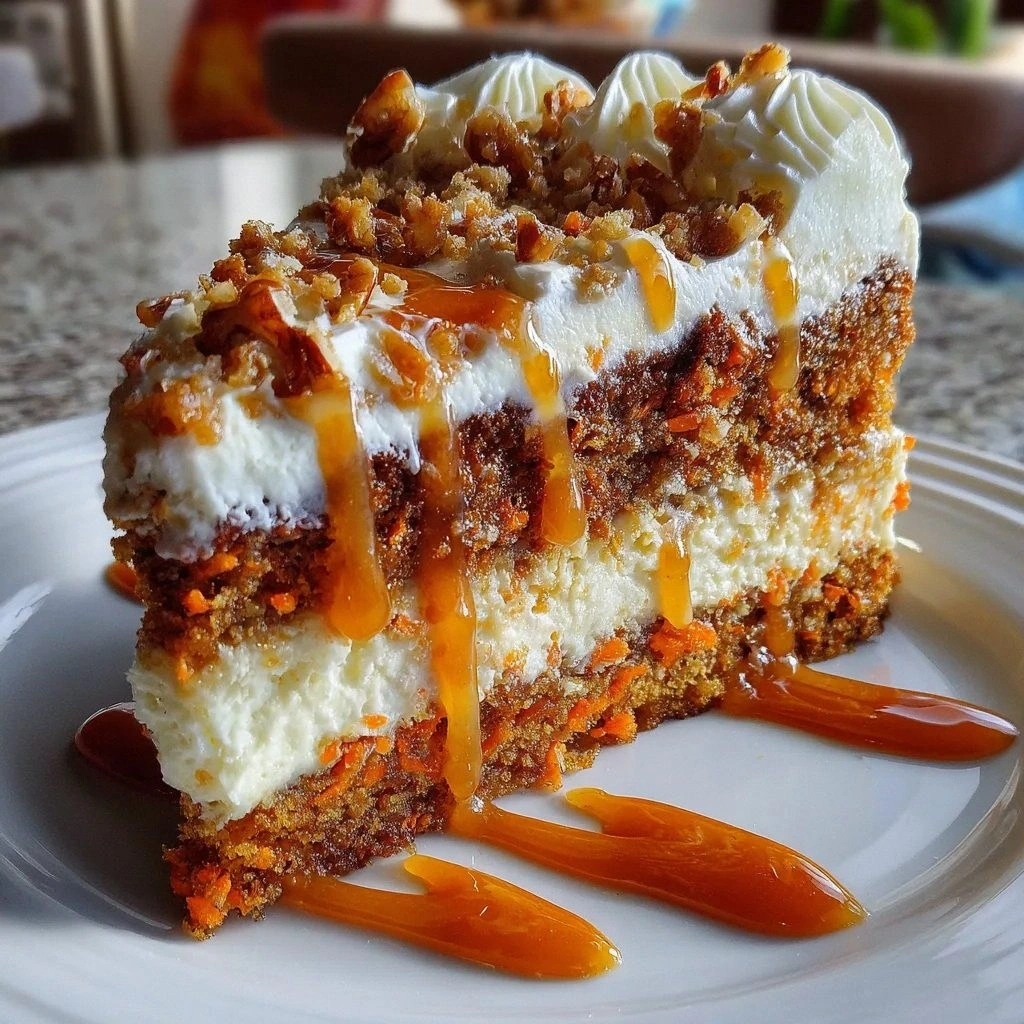
What makes this version stand out? It’s the fusion of two classic desserts—carrot cake and cheesecake—into one harmonious masterpiece. The batter is moist yet firm, the filling is silky with a bright lemon lift, and the entire cake has a texture that feels like velvet on your tongue. I dare you to taste this and not go back for seconds. Most recipes get this completely wrong, but I’ve found the secret: the right leavening, the right amount of oil, and a touch of lemon that brightens the richness. This is hands down the best version you’ll ever make at home. Picture yourself pulling this out of the oven, the whole kitchen smelling incredible, and your friends gasping as they taste the first slice.
Okay, ready for the game‑changer? Let’s walk through every single step. By the end, you’ll wonder how you ever made it any other way. I’ll be honest—I ate half the batch before anyone else got to try it. But that’s the proof that this recipe works. And now, the fun part begins.
What Makes This Version Stand Out
- Flavor: The blend of sweet carrots, warm spices, and a citrusy lemon lift creates a flavor profile that feels both nostalgic and fresh.
- Texture: The batter is moist yet firm enough to hold its shape, while the cheesecake filling is silky smooth and creamy.
- Simplicity: You only need one pan, one set of ingredients, and a basic mixer—no fancy equipment required.
- Uniqueness: Combining two desserts in one layer gives it a surprising twist that will wow any crowd.
- Crowd Reaction: Friends and family will ask for the recipe after the first bite; it’s that unforgettable.
- Ingredient Quality: Using fresh carrots and high‑quality cream cheese elevates the entire experience.
- Cooking Method: Baking the batter and then adding the cheesecake layer in the same oven ensures even cooking and a beautiful rise.
- Make‑Ahead Potential: The cake can be assembled a day ahead and refrigerated, making it perfect for parties.
Inside the Ingredient List
The Flavor Base
The foundation of this cake’s taste lies in the harmonious marriage of sweet sugars and warm spices. Granulated sugar provides the essential sweetness that balances the spices, while brown sugar adds a hint of caramel flavor that deepens the overall profile. Ground cinnamon, a pinch of salt, and a splash of vanilla extract work together to create a comforting, cozy aroma that feels like a hug in a bite. If you skip the cinnamon, the cake will taste flat and forgettable; the spice is what brings life to the batter.
The Texture Crew
The texture of this cake is engineered through careful selection of ingredients. Freshly grated carrots add moisture and natural sweetness, keeping the batter tender and flavorful. All‑purpose flour gives the cake structure and stability, while vegetable oil keeps it moist and tender. Large eggs act as a binder and add richness, ensuring the batter holds together and rises properly. The leavening agents—baking powder and baking soda—are crucial; they create tiny bubbles that lift the cake, giving it a light, airy crumb. If you omit the oil, the cake will dry out and crumble.
The Unexpected Star
The cream cheese is the star of the cheesecake layer, providing that rich, creamy texture we all love. Powdered sugar sweetens the cream cheese mixture and gives it a smooth consistency, while lemon juice adds a bright, tangy note that cuts through the richness. Vanilla extract in the filling enhances the flavor of the cheesecake, making it more complex and inviting. If you skip the lemon, the cheesecake will feel heavy and lack that refreshing lift.
The Final Flourish
The final touches—extra vanilla extract and a small amount of butter—bring everything together. The vanilla extract adds a warm, comforting flavor that complements the spices, while the butter (if used) adds a silky mouthfeel. These subtle ingredients ensure that each bite is balanced, with no single flavor overpowering the rest. Skipping any of these will leave the cake feeling incomplete.
Everything’s prepped? Good. Let’s get into the real action.
The Method — Step by Step
- Preheat your oven to 350°F (175°C). Grease an 8‑inch springform pan with butter or non‑stick spray, then line the bottom with parchment paper to prevent sticking. This step is crucial; a poorly prepared pan can ruin the entire cake’s appearance.
- Combine dry ingredients in a large bowl: whisk together 2 cups all‑purpose flour, 1 tsp baking powder, 1 tsp baking soda, 1 tsp ground cinnamon, and ½ tsp salt. The dry mix should be uniform; any clumps will affect the cake’s texture.
- Mix wet ingredients in a separate bowl: beat 3 large eggs, 1 cup granulated sugar, ½ cup brown sugar, 1 cup vegetable oil, 2 tsp vanilla extract, and 1 ½ cups freshly grated carrots until smooth. The batter should look silky, not lumpy. Kitchen Hack: Use an immersion blender to combine the wet ingredients; it ensures an even distribution of carrots and removes any lumps.
- Combine wet and dry mixtures: gradually pour the wet mixture into the dry, stirring gently with a spatula until just combined. Overmixing can make the cake tough; under‑mixing leaves pockets of dry flour.
- Pour batter into pan and smooth the top with a spatula. Tap the pan lightly on the counter to release any air bubbles. This step helps the cake rise evenly and prevents domed tops.
- Bake the batter for 25 minutes, or until a toothpick inserted near the center comes out clean. The edges should be slightly pulled away from the pan. Watch Out: Do not open the oven door too early; premature opening can cause the cake to sink.
- Cool the cake for 10 minutes in the pan, then transfer to a wire rack to cool completely. This prevents condensation, which can make the bottom soggy.
- Prepare cheesecake filling: beat 16 oz cream cheese until smooth, then add 1 cup powdered sugar, ½ tsp lemon juice, 2 tsp vanilla extract, and 2 large eggs. Mix until creamy and free of lumps. The filling should be thick enough to hold its shape when poured.
- Fold the filling into the cooled cake gently with a spatula, smoothing the top. Return the pan to the oven and bake at 325°F (165°C) for 15 minutes. The filling should set but still have a slight wobble in the center. Let it cool completely before slicing. This final bake ensures the cheesecake layer is firm yet tender.
That’s it—you did it. But hold on, I’ve got a few more tricks that’ll take this to another level.
Insider Tricks for Flawless Results
The Temperature Rule Nobody Follows
Most bakers bake at 350°F, but lowering the temperature to 325°F for the final cheesecake layer allows the filling to set without cracking. I once baked at 350°F and the top cracked like a fragile egg. The trick is to keep the oven at a steady 325°F, which gives the filling time to set evenly.
Why Your Nose Knows Best
Smell the batter as it bakes; a subtle nutty aroma means it’s done. If the scent is still sweet and raw, give it a few more minutes. Your nose is a reliable indicator of doneness.
The 5‑Minute Rest That Changes Everything
After removing the cake from the oven, let it rest on a wire rack for at least 5 minutes before cutting. This short rest allows the cake to set, preventing a messy, crumbly slice.
Use a Water Bath for Even Baking
Place the pan in a larger baking dish filled with about an inch of hot water. This creates a gentle, even heat that prevents the edges from overcooking while the center finishes.
Freeze for a Quick Dessert
Once the cake is fully cooled, wrap it tightly in plastic and freeze. When you’re ready to serve, let it thaw at room temperature for 30 minutes. The cake will retain its moistness and flavor.
Creative Twists and Variations
This recipe is a playground. Here are some of my favorite ways to switch things up:
Nutty Carrot Cake Cheesecake
Add ½ cup chopped walnuts or pecans to the batter for crunch. The nuts add a pleasant contrast to the smooth cheesecake layer and enhance the overall flavor profile.
Spiced Orange Twist
Replace the vanilla extract in the filling with 1 tsp orange zest and add ¼ cup orange juice. The citrus brightens the dessert, making it perfect for spring or summer.
Chocolate Carrot Caramel Layer
Drizzle melted dark chocolate over the top after baking and let it set. The chocolate caramelizes slightly, giving a rich, bittersweet finish that pairs well with the sweet carrot base.
Almond Flour Variation
Use 2 cups almond flour instead of all‑purpose flour for a gluten‑free version. The texture will be denser, but the nutty flavor will complement the carrot and cheesecake layers beautifully.
Maple Syrup Sweetener
Swap the granulated sugar for an equal amount of pure maple syrup. The maple adds a subtle depth of flavor that enhances the caramel notes of the brown sugar.
Garnish with Fresh Cream
Top the finished cake with a swirl of freshly whipped cream and a dusting of cinnamon. It adds a light, airy texture and a final burst of flavor.
Storing and Bringing It Back to Life
Fridge Storage
Wrap the cake tightly in plastic wrap and store in the refrigerator for up to 5 days. The cake stays moist and flavorful, and the cheesecake layer remains creamy.
Freezer Friendly
Place the cake on a baking sheet and freeze until solid, then transfer to a freezer bag. Store for up to 3 months. When ready to serve, let it thaw in the refrigerator overnight.
Best Reheating Method
To reheat, wrap the cake in foil and warm at 300°F (150°C) for 10 minutes. Add a tiny splash of water before reheating to steam the cake back to perfection and keep it from drying out.