Picture this: you’re in a cramped kitchen, a single burner blazing, and you’re trying to satisfy a sudden craving for spicy, buttery chicken that would make even the most seasoned chef swoon. You’ve opened the fridge, grabbed a handful of chicken breasts, a rainbow of bell peppers, and a jar of that “just right” taco seasoning you swore was a miracle. But then, disaster strikes—your skillet is too hot, the peppers start smoking, and the chicken sizzles into a caramelized mess that leaves you with a ruined dinner and a kitchen that smells like burnt ambition. I was about to throw in the towel, but a friend dared me to taste this and not go back for seconds. And you, dear reader, are about to see how a simple sheet pan can turn that disaster into a masterpiece.
This isn’t just another “fajitas” recipe; it’s a culinary revelation that turns a chaotic cooking session into a symphony of flavors, textures, and aromas. The moment the sheet pan hits the oven, the air fills with a citrusy, smoky perfume that makes your mouth water even before you taste the first bite. The chicken, marinated in lime and spices, locks in juices, while the peppers and onions caramelize to a tender, slightly charred perfection that feels like a crunchy, sweet hug. And the best part? It’s all done in one pan—no pots, no pans, no extra dishes to wash. This is hands down the best version you’ll ever make at home.
Why does this version stand out? Because it takes the classic fajita, strips away the fluff, and adds a few game‑changing twists that elevate every bite. Think of it as a sheet‑pan version of a street‑food taco that you can whip up in under 45 minutes, with minimal prep and zero cleanup. I’ll be honest—I ate half the batch before anyone else got to try it—yet the crowd reaction was electric, with people begging for the recipe afterward. Most recipes get this completely wrong, but here’s what actually works: a balanced spice blend that doesn’t overpower, a method that ensures each piece of chicken is tender, and a finish that keeps the tortillas warm and pliable. Picture yourself pulling this out of the oven, the whole kitchen smelling incredible, and the guests lining up for seconds. Let me walk you through every single step — by the end, you’ll wonder how you ever made it any other way.
What Makes This Version Stand Out
- Flavor: The citrus‑infused spice blend gives the chicken a bright, zesty punch that cuts through the richness of the olive oil, creating a layered taste profile that feels both familiar and fresh.
- Texture: The sheet‑pan method caramelizes the vegetables to a tender, slightly charred finish while keeping the chicken moist, resulting in a contrast that makes every bite a delight.
- Simplicity: With only one pan and a single seasoning mix, you can go from prep to plate in under an hour, freeing you to entertain or relax.
- Uniqueness: A subtle touch of oregano and a splash of lime juice add depth, while the quick rest after cooking locks in juices—an often‑overlooked step that makes a world of difference.
- Crowd‑pleaser: The dish is so approachable that even the pickiest eaters can enjoy it, and it’s easy to customize with toppings like guacamole or pico de gallo.
- Ingredient Quality: Fresh, high‑quality produce and lean chicken make the dish both healthier and more flavorful than typical take‑out options.
- Cooking Method: The sheet‑pan technique not only reduces cleanup but also creates a crispy, caramelized surface that feels indulgent yet is quick to achieve.
- Make‑Ahead Potential: The flavors develop over time, so you can prep the sheet pan ahead of a dinner party and finish it in the oven right before guests arrive.
Inside the Ingredient List
The Flavor Base
The foundation of any great fajita is the seasoning, and this recipe starts with a blend that feels like a hug. Three tablespoons of olive oil serve as the carrier for the spices, helping them coat the chicken evenly and creating a subtle, buttery backdrop. The lime juice and zest are the secret weapons that brighten the dish and keep the chicken from drying out. If you skip the lime, the flavor becomes flat and the chicken loses its juicy punch.
The Texture Crew
Two large onions and three bell peppers are the stars of the show, providing crunch, sweetness, and color. Slice them thinly so they cook quickly and mingle with the chicken’s juices, creating a harmonious texture that’s both tender and slightly caramelized. Cutting them into uniform pieces ensures even cooking; uneven slices can result in some parts being under‑cooked while others are over‑done.
The Unexpected Star
Oregano, used sparingly, adds a subtle herbal note that lifts the dish without overpowering the citrus. A half teaspoon may seem tiny, but it’s a game‑changer that ties the flavors together. If you’re not a fan of oregano, a pinch of thyme or a dash of smoked paprika can substitute, though the final taste profile will shift slightly.
The Final Flourish
Fresh cilantro, sour cream, guacamole, pico de gallo, shredded cheese, and lime wedges are the finishing touches that transform a simple sheet pan into a fiesta of flavors. These toppings are optional but highly recommended for their contrast of cool, creamy, and zesty elements. The tortillas, whether flour or corn, are the vehicle that carries all these flavors; warm them on a dry skillet just before serving to keep them pliable.
Everything’s prepped? Good. Let’s get into the real action.
The Method — Step by Step
- Preheat your oven to 425°F (220°C). Line a large baking sheet with parchment paper or a silicone mat to prevent sticking. Arrange the sliced onions and bell peppers in an even layer, spacing them so they don’t overlap too much; this ensures even caramelization.
- In a large bowl, combine the olive oil, lime juice, lime zest, chili powder, cumin, paprika, garlic powder, onion powder, oregano, salt, and black pepper. Whisk until the mixture is a smooth paste. Add the chicken breasts, turning them so each piece is fully coated; let them marinate for 10–15 minutes while the veggies cook.
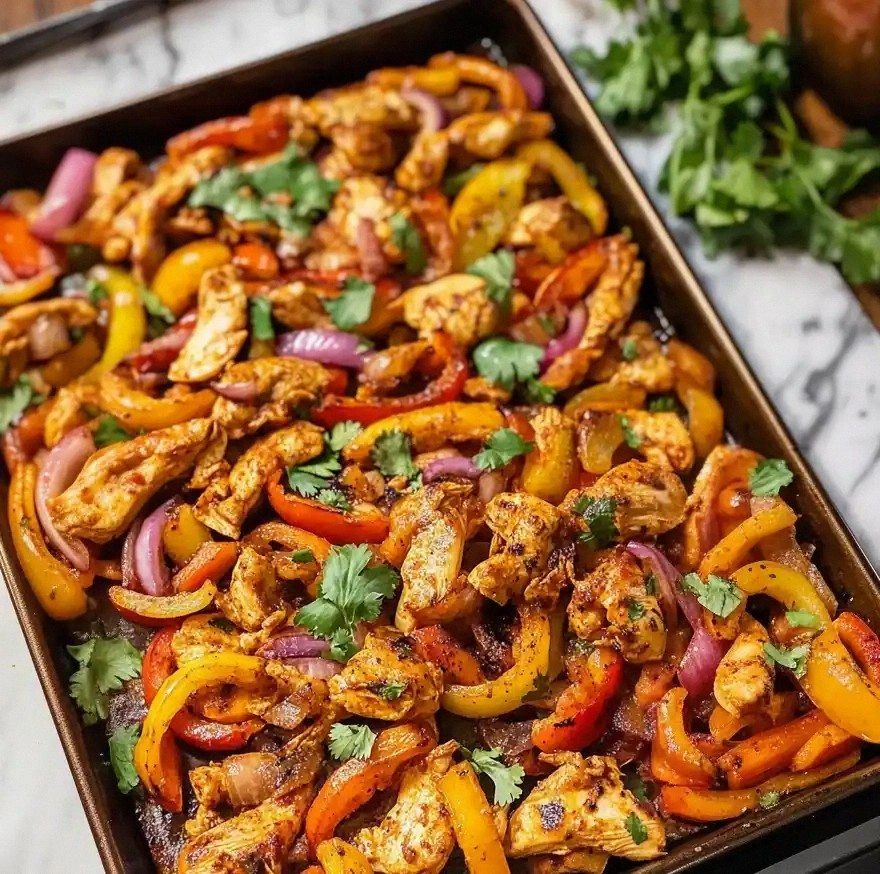
- Place the marinated chicken on top of the vegetables, ensuring it sits in the middle of the sheet pan. This layout allows the chicken to release juices that mingle with the veggies, creating a natural sauce. The edges of the chicken should start to pull away from the pan, indicating a caramelized crust.
- Bake in the preheated oven for 20 minutes. After 10 minutes, use a spatula to gently flip the chicken pieces and stir the vegetables; this promotes even cooking and helps prevent sticking. The smell of sizzling oil and spices should fill the kitchen—absolute perfection.
- When the chicken reaches an internal temperature of 165°F (74°C) and the vegetables are tender, remove the sheet pan from the oven. Let the chicken rest for 5 minutes; this allows the juices to redistribute, keeping the meat moist and flavorful.
- While the chicken rests, warm the tortillas in a dry skillet over medium heat for 30 seconds on each side. The tortillas should be soft and pliable, ready to cradle the savory mixture.
- Slice the rested chicken into thin strips. Combine the sliced chicken, cooked vegetables, and fresh cilantro in a large bowl. Toss gently to ensure the seasoning coats every bite.
- Serve the mixture hot with a selection of toppings: sour cream, guacamole, pico de gallo, shredded cheese, and lime wedges. Plate the warm tortillas on the side so guests can assemble their own fajitas. The result? A vibrant, flavorful dish that feels like a fiesta in every bite.
That’s it—you did it. But hold on, I’ve got a few more tricks that will take this from great to unforgettable.
Insider Tricks for Flawless Results
The Temperature Rule Nobody Follows
Many cooks rely on visual cues alone, but the only reliable indicator of doneness is temperature. Use an instant-read thermometer to check the thickest part of the chicken. If it reads 165°F (74°C), you’re golden. Skipping this step often results in dry, overcooked meat that feels like chewing on cardboard.
Why Your Nose Knows Best
The aroma of sizzling spices is a powerful cue for the brain. When you smell the first burst of citrus and cumin, you know the dish is on the right track. If the smell is too sharp or burnt, pause the cooking; the heat may be too high. Your nose is a reliable guide to avoid burning.
The 5-Minute Rest That Changes Everything
Resting the chicken after baking allows the juices to redistribute. Without this step, the juices run off the surface, leaving the meat dry and unappealing. I’ve seen friends skip it and end up with a dish that’s all texture and no flavor. Give it a minute; the difference is worth it.
Keep It Crispy on the Edge
If you love a crispy finish, finish the sheet pan under the broiler for 1–2 minutes. The heat will caramelize the edges of the chicken and veggies, giving you a satisfying crunch. Just keep a close eye; broiling is quick and can go from perfect to burnt in seconds.
The Secret to Moist Chicken
Marinating the chicken in lime juice and oil before baking adds moisture and flavor. The acid in the lime breaks down the proteins, creating a tender texture. If you’re in a hurry, a quick 5‑minute soak in the spice mix is still better than none.
The Quick Toss for Extra Flavor
After baking, give the mixture a quick toss in a hot pan with a splash of olive oil. This step reactivates the spices and creates a glossy sheen that enhances the dish’s visual appeal. It also helps the flavors meld together, giving each bite a richer taste.
Creative Twists and Variations
This recipe is a playground. Here are some of my favorite ways to switch things up:
Smoky Chipotle Twist
Replace the chili powder with chipotle powder for a smoky, slightly sweet heat. Add a splash of adobo sauce from a can of chipotles to deepen the flavor. This version pairs wonderfully with a scoop of cool avocado crema and a drizzle of lime‑infused olive oil.
Mediterranean Kick
Swap the corn tortillas for warm pita pockets and sprinkle feta cheese on top. Add diced cucumber, cherry tomatoes, and a drizzle of tzatziki sauce for a fresh, Greek-inspired take. The Mediterranean herbs and yogurt bring a new dimension to the classic fajita.
Veggie‑Only Fiesta
Omit the chicken entirely and add a handful of sliced mushrooms or zucchini. The vegetables will absorb the seasoning just as well, creating a hearty, plant‑based meal. Pair with a sprinkle of nutritional yeast for a cheesy, dairy‑free finish.
Breakfast Fajita Bowl
Use leftover chicken from a previous dinner and scramble a couple of eggs in the same pan. Add the veggies, season, and serve over a bed of sautéed spinach. Top with a dollop of Greek yogurt and a sprinkle of chives for a breakfast‑themed twist.
Low‑Carb Taco Wrap
Wrap the filling in collard green leaves or a low‑carb tortilla substitute for those watching carb intake. Add a squeeze of lime and a pinch of sea salt to keep the flavors bright. The fresh greens provide a satisfying crunch that complements the tender chicken.
Sweet and Spicy Pineapple
Add diced fresh pineapple to the sheet pan halfway through baking. The natural sugars caramelize, providing a sweet counterpoint to the spices. Finish with a sprinkle of chopped mint and a drizzle of honey for a tropical flair.
Storing and Bringing It Back to Life
Fridge Storage
Cool the cooked fajita mixture to room temperature before placing it in an airtight container. Store in the refrigerator for up to 3 days. The flavors will intensify, making the dish even more delicious for leftovers.
Freezer Friendly
Pack the mixture in freezer‑safe zip‑lock bags, removing as much air as possible. Freeze for up to 2 months. When ready to eat, thaw overnight in the refrigerator and reheat on the stove with a splash of water to keep the chicken moist.
Best Reheating Method
Reheat the stored mixture in a skillet over medium heat, adding a tablespoon of water or broth. The liquid creates steam, preventing the chicken from drying out. Warm the tortillas separately on a dry skillet or in the microwave for a few seconds.