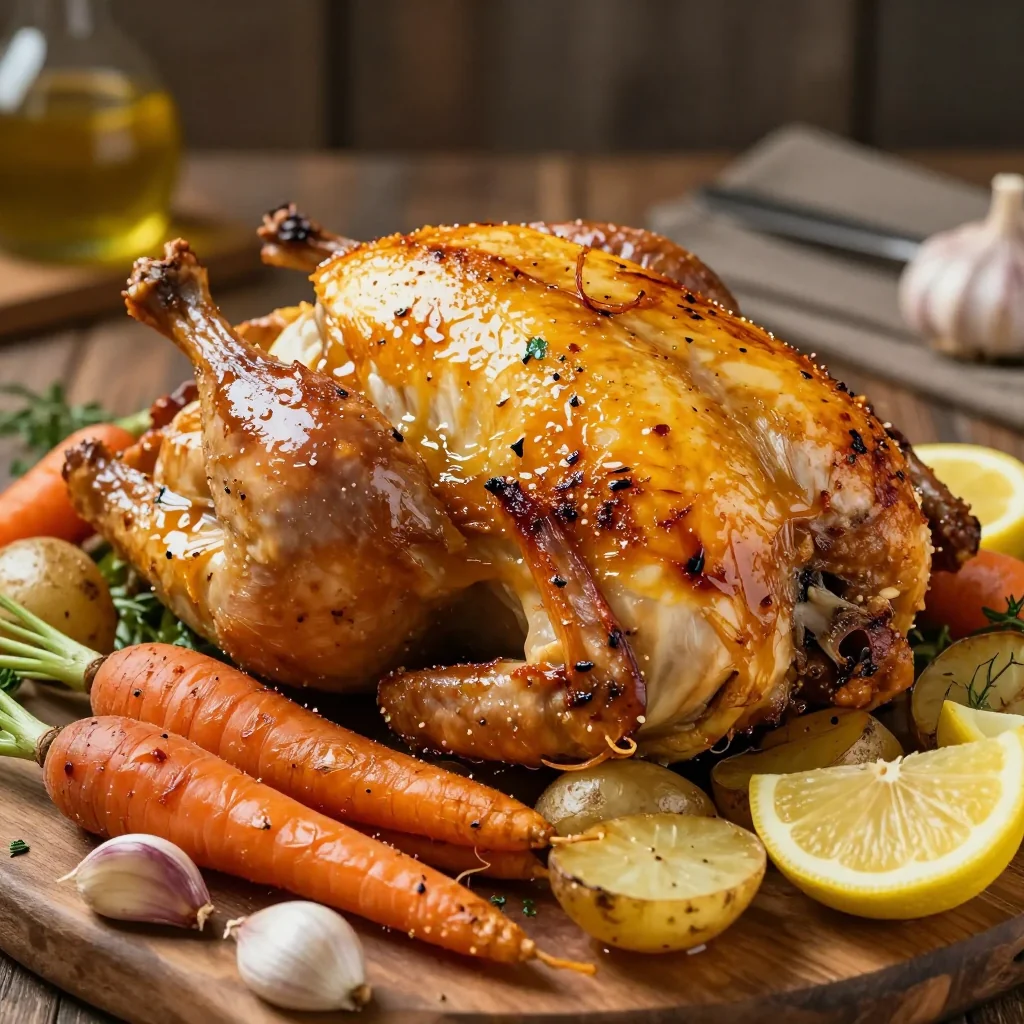
Love this? Pin it for later! 📌
Lemon & Garlic Roasted Chicken with Winter Vegetables for Families
There’s something almost magical about pulling a burnished, golden chicken from the oven—its skin crackling and fragrant with lemon zest and garlic—while underneath, a tumble of caramelized winter vegetables waits to soak up every last drop of those glorious pan juices. This is the recipe I turn to when the daylight fades before dinner and the air smells of woodsmoke and frost. It’s the one I make when friends call to say they’re dropping by, or when my kids have had a long week and need the edible equivalent of a hug.
I first started roasting chicken this way during the year we lived in a drafty Victorian with a temperamental oven. The house was cold, the baby was teething, and I needed a dinner that would warm every room with its scent and leave us with leftovers sturdy enough to morph into soup, tacos, and grain bowls. One pan, one bird, whatever roots I could coax from the winter market—parsnips, candy-stripe beets, tiny potatoes that tasted like earth and butter. Over a decade later, the method hasn’t changed, only the stories around the table. If you’re looking for a recipe that feels like Sunday afternoon even on a Wednesday night, keep reading. This is it.
Why This Recipe Works
- One-pan wonder: Protein, veg, and sauce all roast together—minimal dishes, maximum flavor.
- Built-in side dish: Winter vegetables roast in the same fat that renders from the bird, turning irresistibly sweet and crisp.
- Family-friendly aromatics: Lemon and garlic perfume the meat without overwhelming little palates.
- Flexible timing: The recipe forgives an extra ten minutes if homework runs late.
- Leftover gold: Carcasses and sticky pan bits make the richest next-day stock you’ll ever taste.
- Budget brilliance: A whole chicken feeds six for roughly the price of two drive-thru meals.
- All-season comfort: Hearty enough for January yet bright enough to ward off winter blues.
Ingredients You'll Need
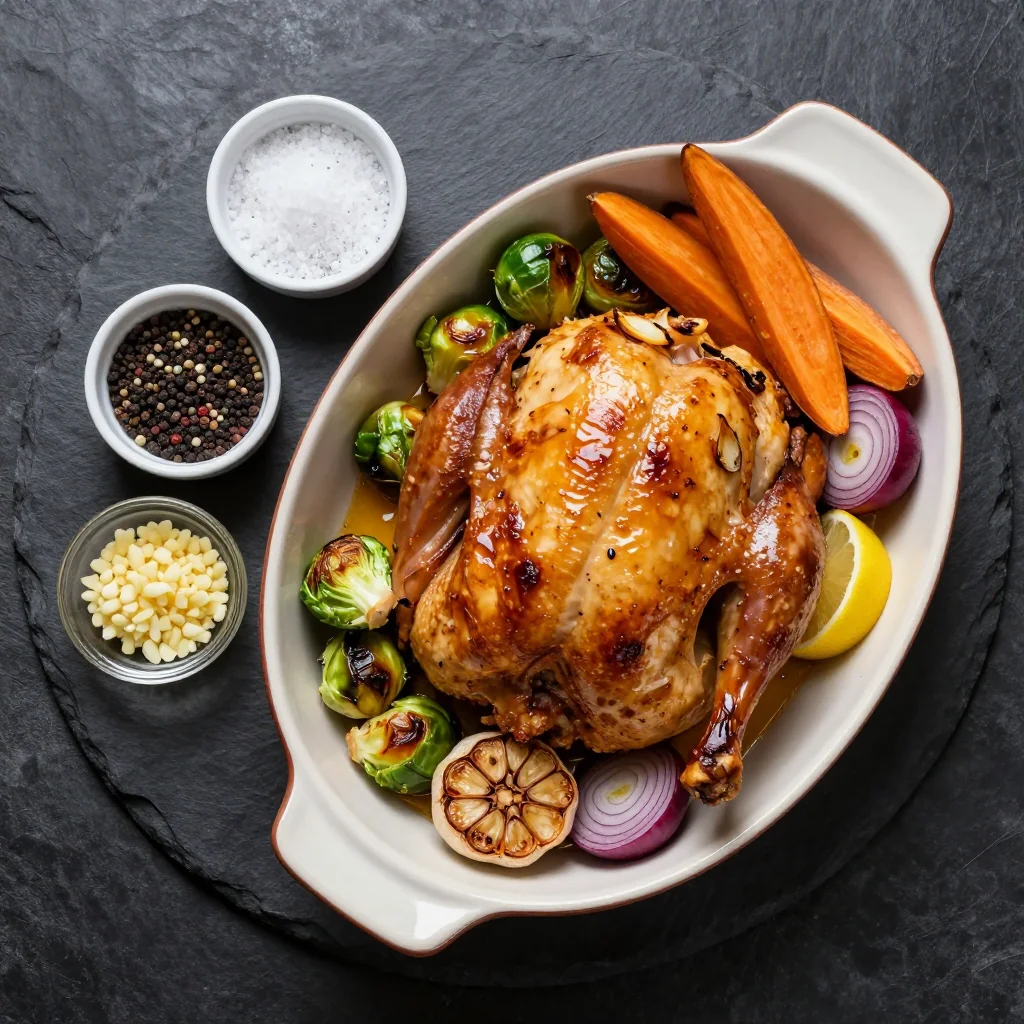
Start with a happy bird. I look for a 4–5 lb (1.8–2.3 kg) free-range chicken, preferably air-chilled; the skin browns more evenly because it hasn’t been plumped with water. If you can only find a larger roaster, add 10–15 minutes to the initial covered roasting time.
Chicken & Marinade
A whole chicken, giblets removed, pat dry with paper towels—moisture is the enemy of crispy skin. You’ll also need two fat lemons: zest one for the marinade, slice the other to tuck inside the cavity where its steam perfumes the meat. Eight cloves of garlic might sound excessive, but roasting tames their bite into mellow, jammy pockets of flavor. I smash the cloves so they slip under the skin and into the vegetable bed. Olive oil carries fat-soluble flavors; a mere two tablespoons does the trick. Salt early—at least 45 minutes before roasting—so it can work its osmotic magic, seasoning the meat all the way through. Fresh thyme holds up in high heat; woody stems also make great “skewers” for lemon slices.
Winter Vegetables
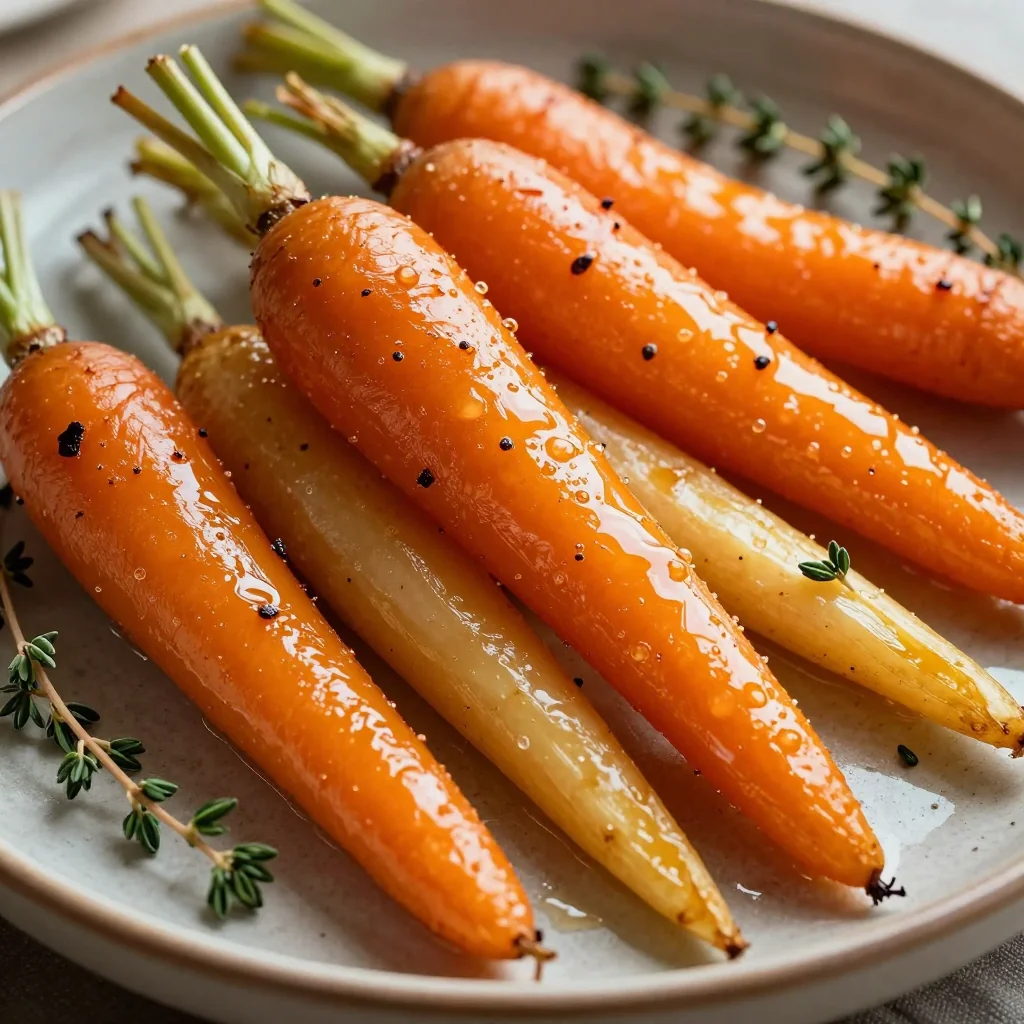
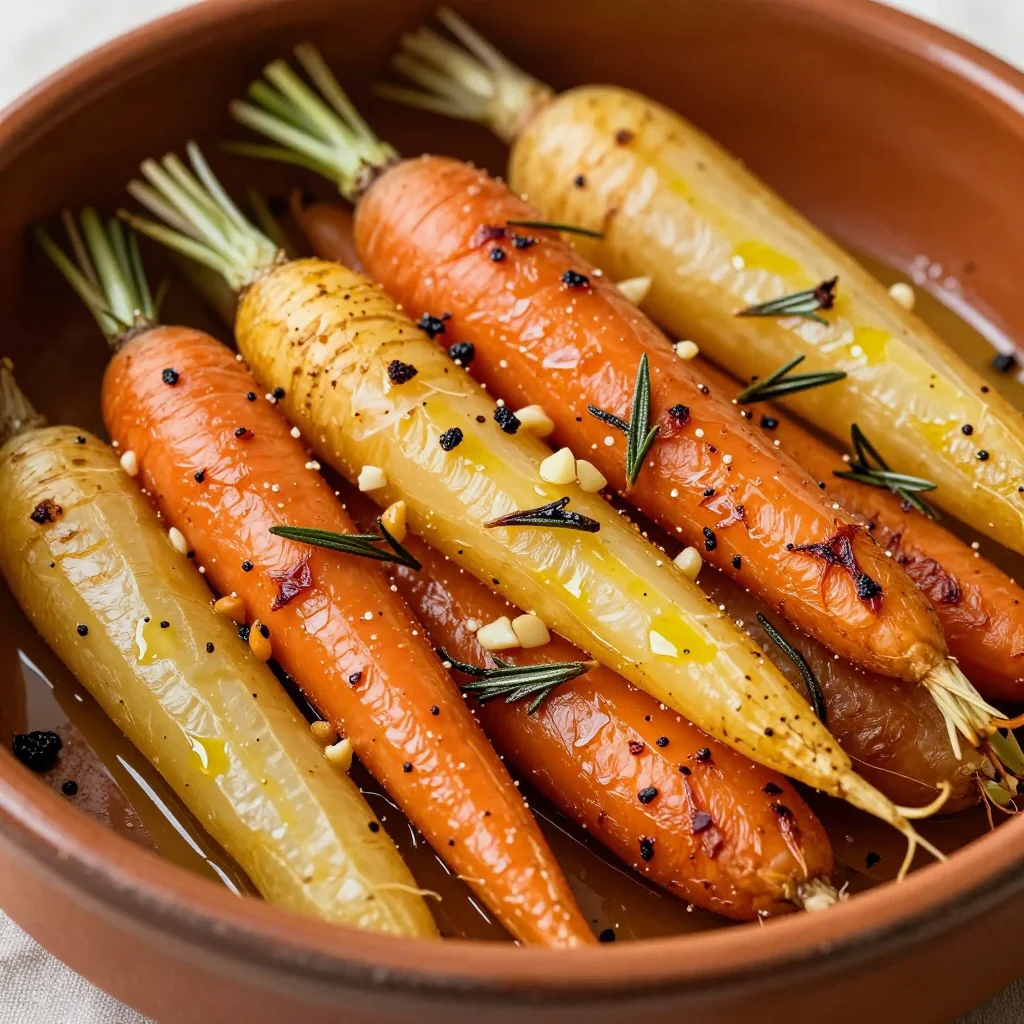
Choose a rainbow of roots for visual appeal and varied nutrients. I like a 50/50 mix of starch and color: Yukon Gold or red potatoes for creamy interiors, parsnips for honeyed sweetness, carrots for earthiness, and beets for mineral depth. Cut everything to roughly 1-inch chunks so they cook evenly. If you include beets, slip them into a small parchment pouch for the first half of roasting; that way they won’t dye the entire pan fuchsia. Brussels sprouts, halved through the core, get audibly crisp; add them only for the final 25 minutes so their outer leaves don’t incinerate. Butternut squash cubes caramelize like candy but can soften to mush if over-roasted—nestle them around, not under, the chicken so they’re kissed by heat rather than submerged in juices.
Pantry Extras
A tablespoon of honey brushed onto the skin during the last ten minutes creates a lacquer that mirrors the vegetables’ sweetness. If your lemons are especially tart, balance with a teaspoon of white miso whisked into the glaze; miso’s umami depth makes the flavors taste rounder. For a peppery finish, scatter baby arugula over the carved platter—the leaves wilt just enough from the residual heat.
Substitutions
No lemons? Use two small oranges plus a splash of white wine vinegar for brightness. Garlic avoiders can substitute a head of fennel, sliced into thick wedges, for a subtler anise note. If olive oil runs low, melted ghee or duck fat will coax even more crunch from the skin. And if thyme is unavailable, rosemary or sage both sing alongside citrus; just halve the quantity—those herbs are stronger.
How to Make Lemon & Garlic Roasted Chicken with Winter Vegetables for Families
Dry-brine the chicken
The night before (or at least 45 minutes), pat the chicken very dry. Mix 1 tablespoon kosher salt, 1 teaspoon baking powder, and the zest of 1 lemon. Loosen the skin over the breast and thighs with your fingers and rub the salt mixture underneath and all over the cavity. Set on a rack over a rimmed tray, uncovered, in the fridge. The skin will desiccate, promising shatter-crisp results.
Marinate with garlic & lemon
In a small bowl, whisk 2 tablespoons olive oil, 1 tablespoon fresh thyme leaves, ½ teaspoon black pepper, and the juice of half a lemon. Smash 8 garlic cloves and stir them in. Retrieve the chicken, brush the marinade all over, and return to the fridge for up to 24 hours. Reserve any extra garlic oil for the vegetables.
Preheat & prep vegetables
Heat oven to 425 °F (220 °C). Line a heavy roasting pan or large cast-iron skillet with parchment for easy cleanup. Toss potatoes, parsnips, carrots, and beets with the reserved garlic oil, ½ teaspoon salt, and a few grinds of pepper. Spread in a single layer with the tougher roots toward the edges where it’s hottest.
Truss loosely & stuff
Pat the chicken skin dry one last time. Stuff the cavity with the remaining lemon slices, 3 thyme sprigs, and 2 extra garlic cloves. Cross the legs and tie with kitchen twine—just tight enough to keep aromatics inside but loose enough for hot air to circulate. Set the bird breast-up on a small rack or a bed of sturdy vegetable chunks so it perches above the juices.
Roast covered, then uncovered
Tent the pan tightly with foil or a lid, crimping to trap steam. Roast 25 minutes per pound (so 1 hour 40 minutes for a 4-lb bird). Remove the cover for the final 30 minutes so the skin bronzes. If your oven runs hot, reduce temperature to 400 °F after uncovering.
Add quick-cooking veg
Slide in Brussels sprouts and squash at the 30-minute mark, cut-side down for maximum caramelization. If the pan looks dry, splash in ¼ cup low-sodium broth or water to prevent burnt fond.
Glaze & finish
Whisk 1 tablespoon honey with 1 teaspoon miso and the juice of the remaining lemon half. Brush over the breast and legs; return to oven 10 minutes until sticky and mahogany. An instant-read thermometer inserted into the thickest part of the thigh should register 165 °F (74 °C).
Rest & carve
Transfer the chicken to a board, tent loosely with the foil you used earlier, and let rest 15 minutes. Meanwhile, return vegetables to the oven if they need more browning. Strain the pan juices into a fat separator; whisk 2 tablespoons of the flavorful liquid back over the veg for gloss.
Expert Tips
Spatchcock for speed
Remove the backbone with kitchen shears, press the breastbone to flatten, and roast at 450 °F. The bird cooks in under an hour and every inch of skin crisps.
Baste sparingly
Opening the oven drops temperature and extends cook time. Trust the dry-brine and high heat; baste only once after glazing to set the honey.
Overnight magic
Letting the salted chicken sit uncovered overnight is the single biggest step toward crackly skin. If short on time, use a hair-dryer on cool for 5 minutes.
Size matters
A 4-lb chicken feeds six when paired with abundant vegetables. If your household skews hungry-teenager, roast two smaller birds on separate racks and swap positions halfway.
Safe carryover
Pull the chicken at 160 °F; residual heat will coast to 165 °F while resting. Tent loosely, not tightly—steam trapped under foil softens skin.
Second life
Save bones in a freezer bag until you have enough for stock. Add carrot peels, onion trimmings, and the spent lemon halves for a broth that gels like Jell-O.
Variations to Try
- Mediterranean twist: Swap lemon for two clementines and add a handful of Kalamata olives to the veg. Finish with fresh oregano.
- Smoky heat: Stir 1 teaspoon smoked paprika and ¼ teaspoon cayenne into the marinade. Serve with cooling yogurt-dill sauce.
- Asian-inspired: Replace salt with 1 tablespoon soy sauce and 1 teaspoon five-spice powder. Glaze with a mix of honey, rice vinegar, and sesame oil; sprinkle toasted sesame seeds before serving.
- All-beet elegance: Use golden and Chioggia beets only; their sugars concentrate into candy-like nuggets. Top with crumbled goat cheese and arugula.
- Vegetarian tablemates: Prepare the vegetables exactly as written, omitting the chicken. Roast a block of feta on a separate tray for the final 15 minutes and serve with crusty bread.
Storage Tips
Refrigerate
Carve leftover meat off the bone and store in an airtight container up to 4 days. Keep vegetables separate so they retain texture. Pour a spoonful of pan juices over the meat to prevent drying.
Freeze
Package carved meat and veg in freezer bags, removing as much air as possible. Freeze up to 3 months. Thaw overnight in the fridge, then reheat in a 350 °F oven with a splash of broth.
Make-ahead
Dry-brine and marinate the chicken up to 2 days ahead. Chop vegetables (except Brussels sprouts) and store submerged in cold water with a squeeze of lemon to prevent browning. Drain and proceed with recipe.
Frequently Asked Questions
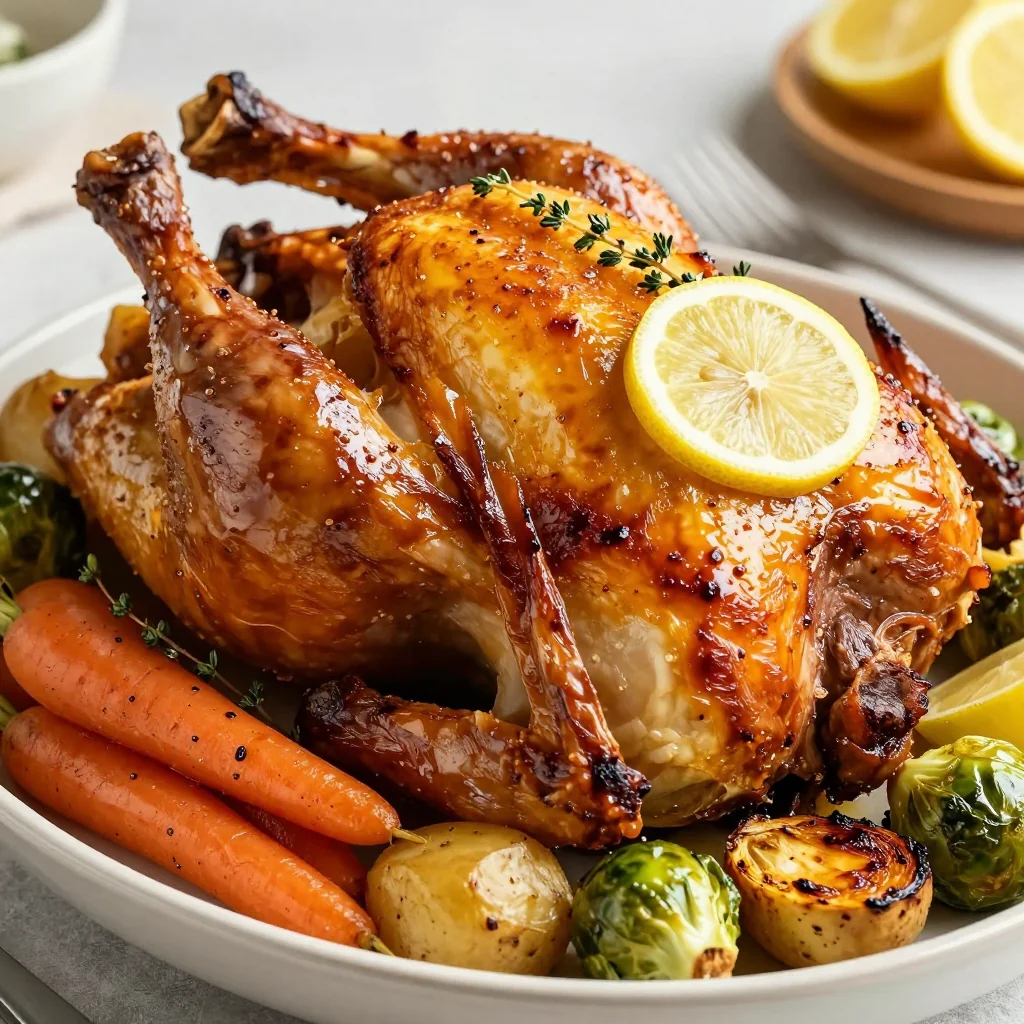
Lemon & Garlic Roasted Chicken with Winter Vegetables for Families
Ingredients
Instructions
- Dry-brine: Mix salt, baking powder, and zest of 1 lemon. Rub under skin and over cavity. Refrigerate uncovered at least 45 minutes or up to 2 days.
- Marinate: Whisk olive oil, juice of ½ lemon, thyme, pepper, and smashed garlic. Brush over chicken; reserve extra for vegetables.
- Preheat: Set oven to 425 °F. Line roasting pan with parchment.
- Prep veg: Toss potatoes, parsnips, carrots, and beets with reserved garlic oil, ½ teaspoon salt, and pepper. Spread in pan.
- Stuff & truss: Pat chicken dry. Stuff cavity with remaining lemon slices and thyme sprigs. Tie legs loosely with twine. Set on rack or veg bed.
- Roast: Cover tightly and roast 25 minutes per pound. Uncover for last 30 minutes. Add Brussels sprouts and squash at 30-minute mark.
- Glaze: Stir honey, miso, and juice of remaining ½ lemon. Brush onto chicken for final 10 minutes. Internal temp should reach 165 °F.
- Rest & serve: Rest 15 minutes before carving. Spoon pan juices over vegetables and arrange on platter with carved chicken.
Recipe Notes
If beets bleed color, wrap them in parchment for the first half of roasting. For extra-crisp skin, switch oven to broil for the final 2 minutes, watching closely.