Love this? Pin it for later! 📌
Last Tuesday at 5:47 a.m. I was standing in my kitchen in mismatched socks, hair pointing every direction but down, and still somehow smiling—because I cracked open the fridge and found a little silicone pouch of sunshine waiting for me. One minute in the microwave, a quick splash of hot sauce on top, and I was out the door with 18 grams of protein in my hand and zero dishes in the sink. That, my friends, is the magic of make-ahead egg bites.
I started batch-baking these after my daughter joined the high-school swim team. Suddenly 6 a.m. became a real hour in our house, not just something flight attendants mention. I needed something she could eat with one hand while she braided her hair with the other—something substantial enough to keep her full through a two-hour practice, but gentle enough that she wouldn’t feel weighed down. After a dozen iterations, these fluffy, freezer-friendly, perfectly portable egg bites were born. They’ve since traveled to ski buses, debate tournaments, early-morning flights, and every “I hit snooze too many times” weekday. If you’ve ever wished your week-day breakfast could feel as indulgent as a coffee-shop sous-vide egg bite without the five-dollar price tag, this recipe is about to become your new morning superhero.
Why This Recipe Works
- Protein Powerhouse: Each two-bite serving delivers 18 g of complete protein—enough to keep you satisfied until lunch.
- Freezer-Friendly: Bake once, freeze for up to three months, and reheat in 60–90 seconds.
- Vegetable-Loaded: Spinach and red bell pepper add fiber, color, and nutrients without sogginess.
- Customizable: Swap cheeses, skip the meat, go dairy-free—framework stays the same.
- Silicone Simplicity: A standard 24-cup mini-muffin tray gives perfect pop-out portions—no liners needed.
- Grab-and-Go: Bites stay tender even when eaten cold, so a microwave is optional.
- Cost-Smart: About 40 ¢ per bite vs. $2–3 per store-bought refrigerated cup.
Ingredients You'll Need
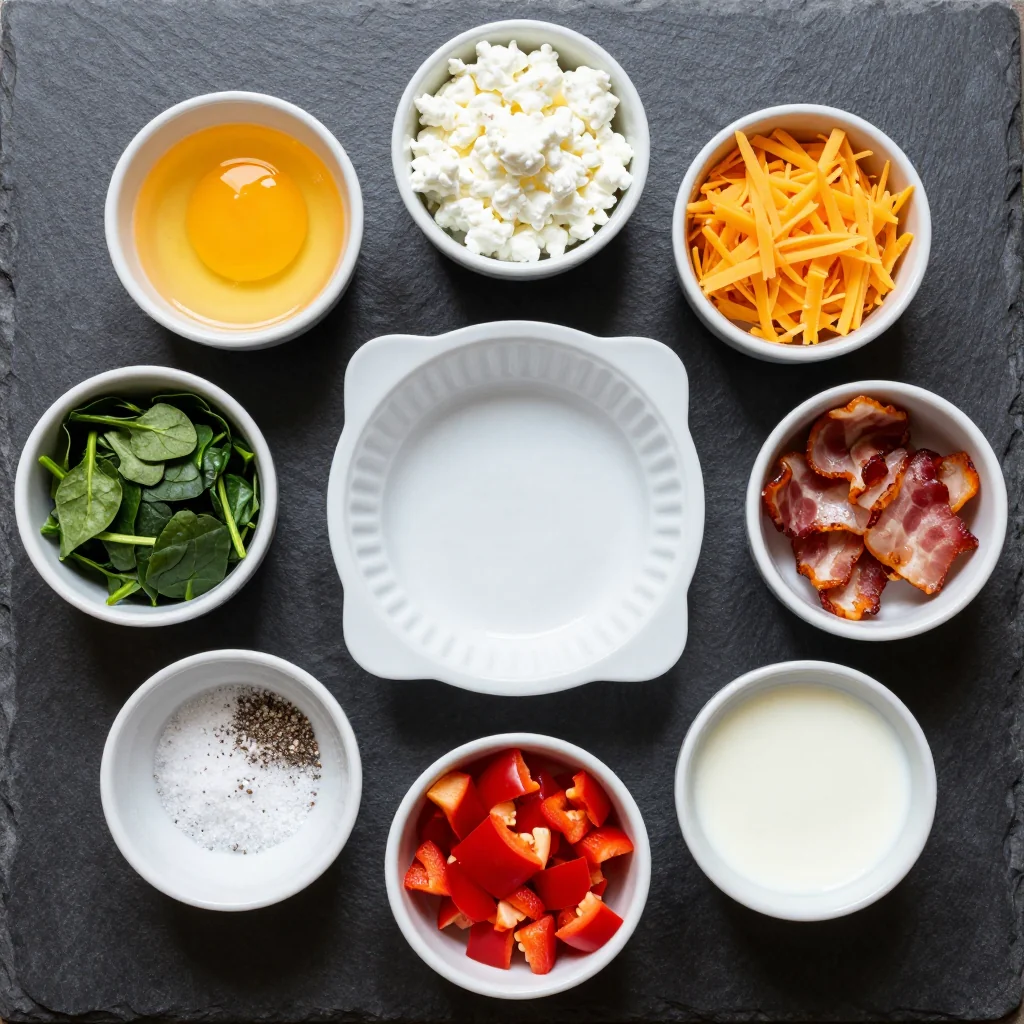
Eggs – The backbone of texture. I use a 50-50 blend of whole eggs plus extra whites for lofty protein without excess fat. Look for pasture-raised if budget allows; the yolks are richer in omega-3s and bake up a deeper gold.
Cottage Cheese – The secret to coffee-shop silkiness. Blending cottage cheese into the custard melts into the bites and keeps them creamy, not rubbery. Choose 2 % or 4 % milk-fat; fat-free can taste chalky.
Greek Yogurt – Adds tangy flavor and stabilizes the custard so the bites don’t weep when thawed. Plain, unsweetened, whole-milk yogurt is my go-to, but 2 % works. Avoid non-fat—it can curdle under high heat.
Cheese – A modest shower of sharp cheddar delivers big flavor; part-skim mozzarella creates those Instagram-worthy cheese pulls. Buy blocks and shred yourself—pre-shredded cellulose can make bites grainy.
Vegetables – Baby spinach wilts almost invisibly into the mix, perfect for skeptics. Red bell pepper brings vitamin C and a pop of color. Whatever you choose, sauté briefly to drive off surface moisture; nobody likes soggy egg sponges.
Lean Protein – Turkey or chicken sausage adds 3 g protein per bite without greasiness. If you’re vegetarian, rinse and drain a can of chickpeas and pulse them in the blender with the custard for plant-powered heft.
Seasonings – A whisper of garlic powder, onion powder, and smoked paprika gives the illusion of a long, slow sauté in butter—without the extra dishes. Finish with a pinch of kosher salt and several grinds of pepper.
How to Make Make Ahead Egg Bites for a Protein Breakfast
Heat the oven and prep the pan
Position rack in center; preheat to 325 °F (165 °C). Lightly grease two 24-cup silicone mini-muffin trays with oil that has a high smoke point—avocado, grapeseed, or refined coconut. Set trays on a sheet pan for stability.
Sauté vegetables
Warm 1 tsp oil in a non-stick skillet over medium. Add ½ cup finely diced red bell pepper and ¼ tsp salt; cook 2 min. Pile on 2 loosely packed cups baby spinach; cook until wilted and liquid evaporates, another 2 min. Spread on a plate to cool quickly.
Blend the custard
In a blender combine 6 large eggs, 4 large egg whites, ½ cup cottage cheese, ¼ cup plain Greek yogurt, 1 Tbsp Dijon mustard, ½ tsp each garlic powder and onion powder, ¼ tsp smoked paprika, ¾ tsp kosher salt, and ¼ tsp black pepper. Blend 20 seconds until silky. Over-mixing adds air bubbles that can create tunnels while baking.
Fold in add-ins
Transfer custard to a large bowl. Stir in vegetables, ¾ cup shredded sharp cheddar, and 4 oz cooked turkey sausage diced small (or ½ cup well-drained black beans for vegetarian). Cheese should be coated but not clumped—this prevents it from sinking.
Portion and bake
Using a small ladle, fill each mini cup to just below the rim (about 1 heaping Tbsp). Bake 14–16 min, until centers puff and register 170 °F (77 °C) on an instant-read thermometer. They will dome slightly and then settle as they cool—this is normal.
Cool and de-pan
Let bites rest 5 min; silicone cools quickly. Invert the tray over a cutting board and push up from the bottom to release. If any stick, run a thin offset spatula around the edge. Transfer to a wire rack to cool completely—this prevents condensation in storage.
Flash-freeze
Arrange cooled bites in a single layer on a parchment-lined sheet pan. Freeze 1–2 hr until rock-solid. This step stops them from freezing into one big egg iceberg and lets you grab exactly what you need.
Package for long-term storage
Transfer frozen bites to labeled freezer bags; press out excess air. Include a small square of parchment between layers to prevent sticking. Properly stored, they maintain best quality for 3 months but are safe indefinitely.
Reheat and serve
Microwave 2–3 frozen bites on high 60–90 seconds, covered loosely to trap steam. Or place in an oven-safe dish, cover with foil, and warm at 325 °F for 12 min. A quick stint under the broiler (1 min) revives that freshly baked top if you’re eating at home.
Expert Tips
Silicone vs. Metal
Metal pans conduct heat faster, leading to rubbery edges. Silicone insulates gently, yielding custardy centers. If all you own is metal, reduce oven to 300 °F and check 2 min early.
Don’t Over-Salt
Cottage cheese and cheddar carry sodium. Taste the raw custard—yes, it’s safe—and adjust seasoning before baking. Remember that freezing dulls flavors slightly; a modest extra pinch compensates later.
Double-Batch Strategy
Two trays won’t fit side-by-side on one rack without blocking air. Bake sequentially, or stagger pans on upper-middle and lower-middle racks, switching halfway.
High-Altitude Fix
Above 3,000 ft, reduce baking powder (if using any add-ins that contain it) by ⅛ tsp and add an extra egg white for structure.
Kid-Proof Texture
If serving picky eaters, purée vegetables right into the custard. They’ll never detect the spinach, but the color stays festive.
Sous-Vide Hack
Pour custard into 4 oz canning jars, finger-tight lids. sous-vide 172 °F for 55 min, chill in ice bath. Result is identical to coffee-shop versions.
Variations to Try
-
Southwest: sub pepper jack, add black beans + corn + cilantro; serve with salsa.
-
Mediterranean: swap spinach for chopped kale, add sun-dried tomatoes, feta, and a whisper of oregano.
-
Everything Bagel: replace sausage with diced smoked salmon, add 1 tsp everything-seasoning and 2 Tbsp minced chive.
-
Dairy-Free: use coconut yogurt, unsweetened oat milk cottage-style cheese (or blended silken tofu), and nutritional yeast for cheesiness.
-
Extra-Veggie: fold in ½ cup finely grated zucchini that has been squeezed dry in a towel; reduce salt by ⅛ tsp.
Storage Tips
Refrigerator: Place cooled bites in an airtight container with parchment between layers. Refrigerate up to 4 days. Reheat 2 bites on 70 % power for 45 seconds.
Freezer: After flash-freezing, pack into heavy-duty freezer bags. Remove as much air as possible (a straw helps). Label with recipe name and date. For best flavor, use within 3 months, though they remain safe longer.
Meal-Prep Containers: Combine 2–3 egg bites with a piece of fruit and a small handful of nuts in single-serve containers. Grab on your way out; everything stays at safe temps if eaten within 4 hr without refrigeration.
Reheating from Frozen: Microwave is fastest, but toaster oven or air-fryer at 325 °F for 6–7 min restores a freshly baked edge. If you have time, thaw overnight in the fridge first to cut reheating to 30 seconds.
Frequently Asked Questions

Make Ahead Egg Bites for a Protein Breakfast
Ingredients
Instructions
- Prep Pans: Preheat oven to 325 °F. Grease two 24-cup silicone mini-muffin trays; set on sheet pans.
- Sauté Veggies: Heat oil in skillet over medium. Cook bell pepper 2 min. Add spinach and pinch salt; wilt 2 min. Cool.
- Blend: Combine eggs, whites, cottage cheese, yogurt, mustard, spices, salt, and pepper in blender; blend 20 seconds.
- Mix-Ins: Transfer custard to bowl; fold in vegetables, sausage, and cheddar.
- Fill: Divide mixture among mini cups to just below rims.
- Bake: Bake 14–16 min until centers are set. Cool 5 min, then pop out.
- Store: Flash-freeze, then bag. Refrigerate up to 4 days or freeze up to 3 months.
- Reheat: Microwave 2–3 frozen bites 60–90 seconds, or air-fry 325 °F 4–5 min.
Recipe Notes
For vegetarian version, swap sausage for ½ cup well-drained black beans. To avoid excess moisture, always sauté and cool vegetables before folding into custard.