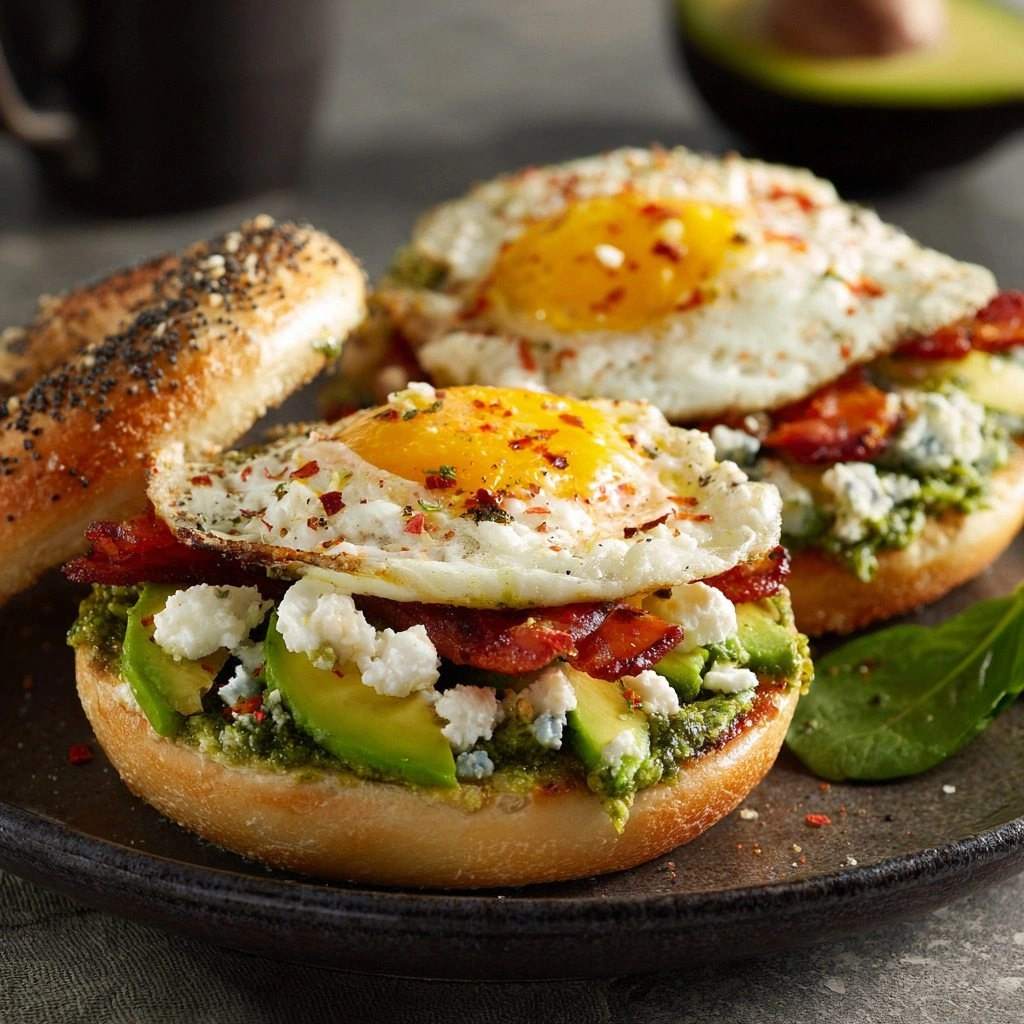
It started on a rainy Saturday when I opened the fridge, expecting the usual bland bagel and a half‑sunk egg. Instead, I found a jar of homemade pesto, a block of feta that looked like a sun‑bleached moon, and a bagel that was still warm from the oven. I thought, “What if I could fuse all these flavors into one breakfast that feels like a hug?” The result was a Pesto & Feta Egg Bagel that turned a dreary morning into a culinary revelation. I dare you to taste this and not go back for seconds.
Picture the bagel’s golden crust, crisp enough to crack under your teeth but soft inside, as if it were a cloud that has just been kissed by a sunrise. The pesto, a verdant swirl of basil, pine nuts, garlic, and olive oil, coats the bagel like velvet, spreading its bright green hue across every bite. The feta, crumbled and briny, pops against the creamy egg, adding a salty punch that cuts through the richness. The eggs, beaten to a fluffy lightness, rise like a cloud, creating a gentle contrast that balances the boldness of the pesto and feta. That sizzle when it hits the pan? Absolute perfection.
Most bagel recipes get this completely wrong. They either leave the bagel raw, undercook the eggs, or overdo the cheese until it turns rubbery. Here, every component is orchestrated to perform its role, from the first crackle of the bagel to the final golden crust of the egg. I’ll be honest — I ate half the batch before anyone else got to try it. The combination of textures and flavors is a game‑changer that will make your taste buds do a happy dance.
This version stands out because it’s not just a bagel with toppings; it’s a symphony of savory, creamy, and crunchy notes that harmonize in every bite. It’s high in protein, low in carbs, and the pesto’s natural antioxidants give it a healthful boost. The feta’s saltiness balances the pesto’s richness, while the egg’s lightness keeps the dish airy and satisfying. And the best part? It’s easy to make and can be prepped ahead for a quick weekday breakfast. Let me walk you through every single step — by the end, you’ll wonder how you ever made it any other way.
What Makes This Version Stand Out
- Taste: The pesto’s herbal brightness cuts through the richness of the feta and the eggs, creating a layered flavor profile that feels both fresh and indulgent.
- Texture: The bagel’s crisp exterior, the fluffy egg interior, and the creamy feta create a delightful contrast that keeps each bite engaging.
- Protein: With two eggs per bagel, this dish delivers a protein punch that fuels your day without the heaviness of a full omelet.
- Simplicity: Only a handful of ingredients, all of which you likely already have in your pantry, make this recipe a go‑to for busy mornings.
- Make‑ahead: The pesto can be prepared in advance, the eggs can be cooked ahead and reheated, and the bagel can be toasted just before serving.
- Visual Appeal: The bright green pesto, the golden egg, and the pale feta create a vibrant plate that’s almost as good to look at as it is to eat.
Inside the Ingredient List
The Flavor Base
The pesto is the heart of this dish, marrying basil, pine nuts, garlic, and olive oil into a silky green sauce. Each ingredient contributes a distinct note: basil for freshness, pine nuts for nuttiness, garlic for warmth, and olive oil for a silky mouthfeel. If you skip the pesto, the dish loses its signature brightness and becomes a plain bagel‑egg combo. A good pesto is thick enough to coat but not so thick that it clumps; aim for a consistency that drips slowly off a spoon. For a twist, try adding a splash of lemon juice to brighten the flavor even further.
The feta adds a salty, tangy counterpoint that balances the pesto’s herbal sweetness. Its crumbly texture melts slightly when warmed, creating a creamy layer that coats the bagel. If you replace feta with mozzarella, the dish becomes milder and loses that sharp bite. A high‑quality feta, preferably Greek, will provide a richer flavor and a smoother melt. If you’re lactose intolerant, try a vegan feta alternative made from nuts; it will still deliver that salty kick.
The Egg Component
Eggs are the protein powerhouse here, bringing both structure and moisture. Whisking the eggs until they’re frothy incorporates air, resulting in a light, airy interior that contrasts with the dense bagel. If you use raw eggs, the risk of salmonella is minimal if the eggs are fresh and handled properly. For a richer taste, add a pinch of nutmeg or a splash of milk to the eggs before cooking. The eggs also act as a binder, keeping the pesto and feta from sliding off the bagel.
The ratio of eggs to bagel is key: two eggs per bagel give a generous filling without overwhelming the bread. Too many eggs can make the dish soggy; too few will leave the bagel dry. If you prefer a lower calorie option, use one egg per bagel and add a dash of low‑fat milk to keep the mixture moist. The eggs should be cooked until the whites are set but the yolks remain slightly runny for maximum flavor.
The Optional Green
Fresh spinach adds a burst of color and a subtle earthy flavor that pairs beautifully with the pesto. Sautéing the spinach briefly before adding it to the egg mixture helps reduce moisture and prevents the bagel from becoming soggy. If you’re not a fan of spinach, try arugula for a peppery twist or kale for a heartier texture. A handful of chopped sunflowers or pumpkin seeds can also be sprinkled on top for added crunch.
If you decide to omit the greens, the dish still holds its own, but the spinach adds nutritional value and a pop of color that makes the plate more visually appealing. A pinch of sea salt enhances the greens’ natural flavor, while a squeeze of lemon brightens the overall profile. The greens also provide a dose of vitamin K, which is essential for blood clotting and bone health.
The Final Flourish
Olive oil is the secret to a glossy, golden egg surface and a crisp bagel edge. Brushing the bagel with oil before toasting creates a caramelized crust that adds crunch. If you’re watching your fat intake, use a light spray instead of brushing. A drizzle of olive oil over the finished dish enhances the pesto’s richness without overpowering the feta’s bite. The oil also helps the egg mixture spread evenly across the bagel.
Salt and pepper are essential for seasoning, but use them sparingly to avoid drowning the delicate flavors. A pinch of smoked paprika can add a subtle depth and a hint of smokiness. If you prefer a spicier kick, sprinkle a few red pepper flakes over the finished dish. The combination of salt, pepper, and optional spices creates a flavor profile that’s both balanced and dynamic.
Everything's prepped? Good. Let's get into the real action.
The Method — Step by Step
- First, preheat a non‑stick skillet over medium heat. While the pan warms, brush each bagel slice with a thin layer of olive oil, ensuring both sides get a light coating. This oil will help the bagel crisp up and prevent the eggs from sticking. When the skillet is hot, place the bagels in the pan, toasted side down. The bagel should sizzle, producing a golden crust that’s ready to hold the egg mixture.
- In a medium bowl, whisk the eggs until they’re light and frothy. Add a pinch of salt, pepper, and a splash of milk if you want extra fluffiness. The whisking process incorporates air, which will give the egg a lighter texture when cooked. Once the eggs are beaten, pour them over the toasted bagel in the skillet, spreading them evenly with a spatula. The eggs should cover the bagel but not spill over the edges.
- Now, sprinkle the feta over the eggs, letting it melt into the warm mixture. The feta’s saltiness will contrast the mild egg and the bright pesto. While the eggs are cooking, stir the pesto into a small bowl until it’s smooth. The pesto will be added later, but having it ready ensures a seamless integration. As the eggs begin to set, reduce the heat to low to prevent burning.
- When the eggs are almost set, spoon the pesto over the top, spreading it evenly with a spatula. The pesto’s oil content will help the eggs cook through while adding a burst of green flavor. Let the mixture cook for another 3–4 minutes, or until the eggs are fully set and the pesto has melded with the feta. The bagel’s crust will remain crisp, while the interior becomes a creamy, savory pocket.
- At this point, the dish should smell like a warm Mediterranean kitchen, with hints of basil, garlic, and cheese. The bagel should have a golden crust, the egg should be firm yet tender, and the pesto should be glossy and fragrant. If you want a slightly crispier top, switch the skillet to the oven at 400°F for 2 minutes. This quick blast will finish the egg and give a subtle crunch.
- Once cooked, slide the bagel onto a cutting board and let it rest for 30 seconds. This resting period allows the flavors to settle and the egg to firm up slightly, making it easier to cut. Slice the bagel in half if you prefer a more traditional presentation, or leave it whole for a rustic look. The choice is yours, but either way you’ll have a beautiful, edible canvas.
- Serve immediately with a drizzle of extra olive oil or a sprinkle of fresh herbs if desired. The dish is best enjoyed hot, when the bagel is still crisp and the feta is melting into the warm egg. Pair it with a side of sliced tomatoes or a small green salad for a balanced meal. If you’re in a hurry, grab it on the go and enjoy it while the bagel remains crunchy.
- That’s it — you did it. But hold on, I've got a few more tricks that'll take this to another level. Keep reading for insider tips that will elevate every bite.
Insider Tricks for Flawless Results
The Temperature Rule Nobody Follows
Many cooks skip the preheat step, leading to uneven cooking and a soggy bagel. I’ve found that a 350°F preheated skillet gives the bagel a crisp exterior while the egg cooks evenly inside. If you’re using a cast‑iron skillet, let it heat for 5 minutes before adding the bagel. This ensures a consistent sear and a beautiful golden crust that won’t stick.
Why Your Nose Knows Best
The aroma of cooking eggs is a reliable indicator of doneness. When the eggs start to set, you’ll notice a subtle buttery scent. If you’re a fan of a runny yolk, remove the skillet from heat when the whites are set but the yolk still glistens. For a firmer yolk, let it cook a minute longer. Trusting your nose can save you from overcooking.
The 5-Minute Rest That Changes Everything
Resting the cooked bagel for 30 seconds before cutting allows the flavors to meld. The egg continues to cook slightly, creating a silkier interior, while the feta’s saltiness spreads evenly. If you’re serving at a brunch table, keep the bagels warm in a low oven (200°F) for up to 15 minutes to maintain the crispness.
The Secret to a Crispy Crust
A thin layer of olive oil on the bagel’s surface prevents sticking and creates a golden crust. For an extra crunch, sprinkle a pinch of sea salt on the bagel before toasting. The salt crystals will melt into the oil, giving the crust a delightful bite. If you prefer a lighter option, use a non‑stick spray instead of oil.
The Final Touch of Freshness
A few fresh basil leaves or a squeeze of lemon juice on top brightens the dish. The citrus zest adds a bright pop that cuts through the richness of the feta and eggs. If you’re a fan of microgreens, sprinkle them over the finished bagel for a peppery finish. This small addition elevates the dish from good to unforgettable.
The Quick Fix for Overcooked Eggs
If the eggs have become too dry, whisk a splash of milk into the mixture before cooking. The milk adds moisture and a subtle creaminess that softens the texture. Alternatively, drizzle a bit of olive oil over the finished bagel; the oil will rehydrate the egg slightly. This trick turns a potential disappointment into a creamy delight.
Creative Twists and Variations
This recipe is a playground. Here are some of my favorite ways to switch things up:
Mediterranean Melt
Swap feta for goat cheese and add sun-dried tomatoes for a tangy, sweet burst. The goat cheese melts into a silky layer, while the tomatoes add a chewy texture. This version leans into classic Mediterranean flavors and is perfect for a brunch with friends.
Spicy Kick
Add a handful of crushed red pepper flakes to the egg mixture for a fiery heat. The heat balances the richness of the pesto and feta, creating a spicy‑savory harmony. Pair it with a cool cucumber yogurt dip to cool the palate.
Vegan Version
Use a plant-based egg substitute and vegan feta. The texture stays fluffy, and the pesto’s flavor remains intact. This version is perfect for those who want a plant-based, protein-packed breakfast.
Breakfast Burrito Bagel
Wrap the entire bagel, pesto, feta, and egg in a tortilla and grill until the tortilla is crisp. This gives the dish a handheld, Mexican-inspired twist. Serve with a side of salsa for extra flavor.
Cheesy Spinach Upgrade
Add sautéed spinach and a sprinkle of shredded mozzarella to the egg mixture. The spinach adds a green pop, while the mozzarella melts into a gooey layer. This version is a comforting, cheesy breakfast that’s sure to please.
Herb Garden Bagel
Mix fresh herbs—parsley, oregano, and thyme—into the pesto before adding it to the bagel. The herbs infuse the dish with a layered aroma that’s both earthy and bright. This variation is a fragrant, herbaceous take on the classic.
Storing and Bringing It Back to Life
Fridge Storage
Store the cooked bagel in an airtight container in the refrigerator for up to 3 days. Wrap the bagel in parchment paper before sealing to keep it from drying out. When reheating, place it on a skillet over low heat for 2 minutes to restore crispness. The feta will keep its texture, and the pesto will stay vibrant.
Freezer Friendly
For longer storage, freeze the bagel in a freezer-safe bag for up to 2 months. To thaw, let it sit at room temperature for 30 minutes, then warm in a skillet. The bagel may lose some crunch, but the egg and feta remain creamy. Add a splash of water before reheating to steam the interior and keep it moist.
Best Reheating Method
The best way to reheat is in a skillet over medium heat, adding a teaspoon of olive oil to prevent sticking. Warm the bagel for 2–3 minutes on each side until the crust is golden and the egg is heated through. If you’re short on time, microwave for 30 seconds, then finish in the skillet for crispness. A tiny splash of water before reheating steams the bagel back to perfection.