I still remember the day I accidentally created the most ridiculously good dessert of my life. It was supposed to be a quiet Sunday morning, the kind where you promise yourself you'll eat something virtuous like oatmeal and maybe fold the laundry that's been giving you side-eye from the basket since Thursday. Instead, I found myself staring down a half-empty box of donuts, a cake pan, and a wild, sugar-fueled thought: what if I could fuse these two worlds into one glorious, over-the-top masterpiece? Twenty minutes later my kitchen smelled like a carnival, the countertops looked like a powdered-sugar crime scene, and I was holding a forkful of warm, tender crumb that tasted like every childhood dream rolled into one. I dare you to taste this and not go back for seconds—actually, I dare you to make it through the cooling period without "testing" at least three forkfuls.
Picture yourself pulling this out of the oven, the whole kitchen smelling incredible, like someone opened a downtown bakery right in your home. The aroma is a heady swirl of vanilla, nutmeg, and butter that drifts through the hallway and lures even the most determined napper from their Sunday cocoon. The edges caramelize into delicate, bronzed ridges while the center stays plush and custardy, almost like a bread pudding that went on vacation and came back with a tan. If you've ever struggled with dry, sad bundt cakes or cloyingly sweet breakfast breads, you're not alone—and I've got the fix. This donut cake is hands down the best version you'll ever make at home, because it marries the fluffy crumb of your favorite yeasted donut with the ease of a one-bowl batter and the dramatic flair of a Bundt's curves.
Stay with me here—this is worth it. Most recipes get this completely wrong by treating the donuts as a simple add-in, but the real magic happens when you let them melt, toast, and rehydrate into the surrounding custard. I'll be honest: I ate half the batch before anyone else got to try it, standing at the counter in my pajamas, convinced I was conducting "quality control." The texture is a revelation: soft pockets where the donut chunks have almost dissolved, contrasted with chewy, caramelized corners where they crisp against the pan. The glaze seeps into every crevice, so each slice is striped with sweet rivulets that crackle under your fork like thin ice.
Okay, ready for the game-changer? We're going to layer day-old glazed donuts with a silky custard, bake it all until it puffs like a proud soufflé, then drench it in a glossy vanilla bean icing that sets just enough to give you that signature donut sheen. Let me walk you through every single step—by the end, you'll wonder how you ever made it any other way.
What Makes This Version Stand Out
Flavor Explosion: By using real glazed donuts instead of plain bread, every bite carries that nostalgic bakery sweetness without needing cups of extra sugar. The glaze on the donuts caramelizes in the oven, creating pockets of honeyed crunch that taste like the crispy edges of a crème brûlée.
Texture Play: We're talking about a custardy interior surrounded by chewy, toasty edges—think bread pudding meets funnel cake meets your favorite coffee-shop donut. The contrast between soft custard and slightly crisp donut crust is the texture equivalent of a plot twist you never saw coming.
One-Bowl Ease: No stand mixer, no yeast, no waiting for dough to rise. You whisk, you pour, you bake. Even my most gadget-averse friends have nailed this on the first try, proving that impressive doesn't have to mean complicated.
Leftover Hero: Got a box of stale donuts haunting your counter? This recipe transforms them into something that tastes intentional, luxurious, and anything but second-best. It's the culinary equivalent of turning water into wine, only better because you can eat it with a spoon.
Crowd Magnet: Bring this to brunch and watch grown adults revert to giddy children. I've seen it disappear in six minutes flat, with people hovering like vultures, negotiating for the corner piece with the extra caramelized edge.
Make-Ahead Magic: Prep the whole thing the night before, refrigerate, then bake in the morning while you brew coffee. The flavors meld into something even more outrageous, and you get to be the person who "just whipped something up."
Ingredient Integrity: We're using whole milk, real butter, and a whisper of nutmeg so the final taste is rich but not cloying. This isn't a sugar bomb; it's a balanced dessert that leaves you satisfied rather than buzzing on a neon sugar high.
Alright, let's break down exactly what goes into this masterpiece...
Inside the Ingredient List
The Flavor Base
Whole milk is non-negotiable here; skim or low-fat versions leave you with a watery custard that tastes like diet sadness. The fat in whole milk carries the vanilla and nutmeg, creating that rounded, ice-cream-shop flavor that makes people close their eyes involuntarily after the first bite. If you're in a pinch, half-and-half thinned with a splash of water works, but anything lighter and you'll lose the luxurious mouthfeel that makes this recipe famous in my circle.
Dark brown sugar adds molasses depth you can't get from white sugar alone. It melts into the custard, leaving subtle toffee notes that play beautifully against the sweet glaze of the donuts. In a pinch, light brown works, but you'll miss that whisper of smoky complexity that keeps everyone guessing the secret ingredient.
The Texture Crew
Eggs are the scaffolding of this dessert, transforming liquid custard into a silky, sliceable cake. Use room-temperature eggs; cold ones can cause the melted butter to seize, giving you a curdled batter that bakes into a lumpy mess. Free-range eggs have richer yolks, which translate to a deeper golden color and more decadent flavor—worth the extra dollar when you're serving something this spectacular.
Unsalted butter lets you control the salt level precisely. Salt heightens sweetness, so a quarter-teaspoon in the custard balances the sugar and keeps the dessert from tipping into cloying territory. Melt it and let it cool slightly so it doesn't scramble the eggs when you whisk everything together.
The Unexpected Star
Day-old glazed donuts are the covert operatives of this recipe. Fresh ones turn gummy, but yesterday's donuts have lost just enough moisture to soak up custard while still holding their identity. Plain cake donuts work in a pinch, but glazed yield that crackly, candy-like edge that shatters under your fork. If all you have are frosted varieties, scrape off most of the icing first—too much sugar creates a sticky, tooth-aching crust.
A single teaspoon of vanilla bean paste gives you those dramatic black specks that scream gourmet. Extract works, but paste delivers floral, almost bourbon-like notes that bloom in the oven. Skip imitation vanilla unless you want your kitchen to smell like a candle store in a mall.
The Final Flourish
Nutmeg is the quiet genius here—just an eighth of a teaspoon adds warmth without announcing itself. Fresh-grated nutmeg is a revelation, tasting like citrus and pine and Christmas morning. Pre-ground works, but bump the quantity to a quarter-teaspoon because its oils fade quickly on the shelf.
Everything's prepped? Good. Let's get into the real action...
The Method — Step by Step
- Preheat your oven to 350°F (175°C) and position a rack squarely in the center. While the oven heats, generously butter a 10-cup Bundt pan, making sure to coat every ridge and swirl; cold butter works best because it grabs onto flour, creating a non-stick shield that releases like magic later. Dust the buttered pan with a spoonful of flour, tap out the excess, and set it on a baking sheet—this prevents the bottom from browning too fast and gives you insurance against leakage. That sizzle when the butter hits the hot pan later? Absolute perfection.
- Cube your day-old donuts into rough 1-inch pieces; precision isn't the goal here, so embrace the rustic vibe and let some chunks be bigger for textural contrast. Spread them on a large plate and microwave for 20 seconds—just enough to soften the glaze so it becomes sticky rather than brittle. This step helps the donuts meld with the custard instead of floating like sugary buoys. Okay, ready for the game-changer?
- In a large bowl, whisk together the whole milk, brown sugar, eggs, melted butter, vanilla bean paste, salt, and nutmeg until the mixture looks like liquid caramel and smells like melted ice cream. Don't over-whisk; you want everything homogenous but not frothy, because excess air creates a soufflé that collapses into a crater. The batter should coat the back of a spoon like velvet and leave a trail when you run your finger through it.
- Fold in the donut cubes with a rubber spatula, pressing gently so every piece gets a milk bath. Let the mixture stand for 10 minutes, giving the donuts time to drink up custard; you'll see the level drop slightly—this is the magic moment where stale becomes sublime. Resist the urge to snack on soggy donut cubes, though I won't judge if one accidentally falls into your mouth.
- Pour the soaked donut mixture into your prepared Bundt pan, pressing lightly to fill air pockets. Tap the pan on the counter to settle the custard and eliminate bubbles; you want a smooth, even surface that bakes uniformly. Slide the sheet pan into the oven and bake for 30–35 minutes, rotating halfway through for even browning. The top will puff and bronze, and a knife inserted near the center should come out with just a few moist crumbs attached—think bread pudding, not sponge cake.
- Cool the cake in the pan on a wire rack for 15 minutes—this is the 5-minute rest that changes everything, letting the custard set so it unmolds cleanly. Place a cutting board over the Bundt pan, invert confidently, and give the pan a gentle shake; the cake should release with a satisfying plop and a cascade of caramelized edges. If it resists, lay a warm towel over the pan for 30 seconds; the steam coaxes stubborn bits to let go.
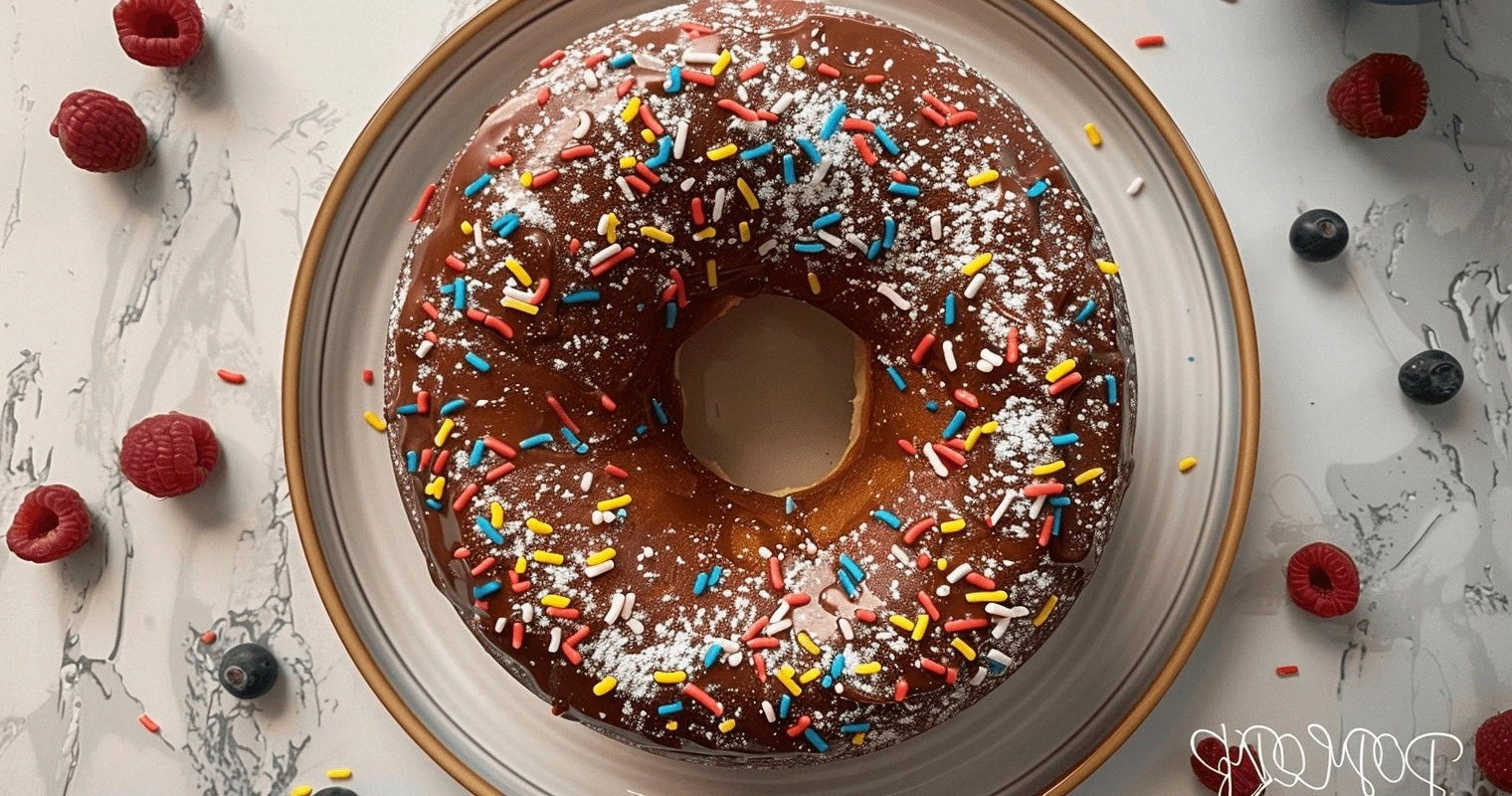
- While the cake cools, whisk together powdered sugar, a splash of milk, and a dash of vanilla until you get a thick but pourable glaze that ribbons off the spoon. Drizzle it in generous loops over the crown of the cake, letting it drip down the ridges like icing on a giant donut. The glaze sets into a crackly shell that shatters under your fork, revealing the custardy interior.
- Slice with a serrated knife using a gentle sawing motion to preserve those gorgeous strata of donut and custard. Serve warm or at room temperature—both are transcendent, but warm edges give you that fresh-from-the-fryer nostalgia. Garnish with a dusting of powdered sugar if you want to look fancy, though honestly, it's like putting lipstick on a unicorn.
- Store leftovers under a cake dome at room temperature for up to two days, though I've never seen it last more than six hours. If you somehow manage restraint, wrap slices individually and freeze; they reheat in a 300°F oven for 10 minutes and taste just-baked. And now the fun part: customizing this blank canvas to your heart's desire.
That's it—you did it. But hold on, I've got a few more tricks that'll take this to another level...
Insider Tricks for Flawless Results
The Temperature Rule Nobody Follows
Room-temperature dairy and eggs mix into a silken emulsion that bakes evenly, eliminating the dreaded curdled custard. Pull everything out of the fridge 45 minutes before you start; if you're rushed, submerge eggs in warm water for 5 minutes and microwave milk in 10-second bursts until it feels lukewarm on your wrist. A friend tried skipping this step once—let's just say her cake emerged with the texture of cottage cheese and the visual appeal of a lunar crater.
Why Your Nose Knows Best
Trust your sense of smell over the timer. When the cake is nearly done, your kitchen will fill with the scent of caramelized sugar and toasted vanilla—rich but not burnt. If you catch a whiff of butter browning deeply, yank that pan out; it's the difference between a golden crown and a bitter edge that no amount of glaze can hide.
The 5-Minute Rest That Changes Everything
After baking, the residual heat continues to cook the custard. Letting the cake stand in the pan for exactly 15 minutes sets the structure so it unmolds without tearing, yet stays molten in the center. Slice too early and you get a river of sweet custard flooding the plate; too late and it sticks like cement. Set a timer and walk away—use those minutes to brew coffee and anticipate greatness.
Glaze Consistency Secrets
The perfect glaze is thick enough to coat but fluid enough to drip artfully. Start with less liquid than you think—you can always thin, but you can't thicken without adding more sugar. Aim for the texture of warm honey; when you lift the spoon, the ribbon should hold its shape for 2 seconds before melting back into the bowl.
Serving Temperature Sweet Spot
Warm cake plus cool glaze equals textural nirvana. If you serve it piping hot, the glaze melts into a sheer veil; too cold and the cake tastes dense. Aim for gently warm—about 30 minutes out of the oven—when the custard still sighs under your fork but the glaze sets into that signature crackle.
Creative Twists and Variations
This recipe is a playground. Here are some of my favorite ways to switch things up:
Maple Bacon Bliss
Swap brown sugar for maple sugar, fold in crispy bacon bits, and replace the vanilla glaze with maple icing. The smoky-sweet combo tastes like Saturday morning at the diner, only fancier. Serve with strong coffee and watch the crowd lose their minds.
Chocolate-Cherry Decadence
Use chocolate-glazed donuts, stir in chopped dried cherries, and add a tablespoon of cocoa powder to the custard. The fruit plumps during baking, creating jammy pockets that burst like tiny cherry bombs under your fork.
Lemon-Raspberry Sunrise
Add a teaspoon of lemon zest to the custard and fold in fresh raspberries. The tart berries cut through the sweetness, and the zest perfumes the whole cake like summer in slice form. Finish with a lemon-juice glaze for extra zing.
Salted Caramel Dream
Drizzle homemade caramel between layers of donuts before baking, then finish with a salted caramel glaze. The salt amplifies the buttery notes and makes the sweetness sing rather than shout. Pro tip: sprinkle flaky salt on top for crunch.
Coconut-Pineapple Vacation
Use coconut milk instead of dairy, fold in crushed pineapple (drained well), and top with toasted coconut flakes. Close your eyes and you're on a beach somewhere, only with more butter and zero sand in your shoes.
Espresso-Chip Indulgence
Dissolve a shot of espresso in the milk and fold in mini chocolate chips. The coffee bitterness balances the sugar, and the chips melt into fudgy pockets. Serve with a scoop of coffee ice cream for the ultimate affogato-adjacent experience.
Storing and Bringing It Back to Life
Fridge Storage
Wrap individual slices tightly in plastic wrap and refrigerate for up to 4 days. The cold firms the custard, creating a dense, fudgy texture some people actually prefer. Bring to room temperature for 30 minutes or microwave for 15 seconds to restore the plush crumb.
Freezer Friendly
This cake freezes beautifully. Wrap whole slices in plastic, then foil, and freeze for up to 2 months. Thaw overnight in the fridge, then warm in a 300°F oven for 10 minutes. Add a fresh drizzle of glaze to revive that just-baked shine.
Best Reheating Method
Add a tiny splash of water before reheating—it steams back to perfection. Cover loosely with foil to prevent the glaze from scorching. The cake emerges soft, fragrant, and ready to rival anything fresh from the oven.