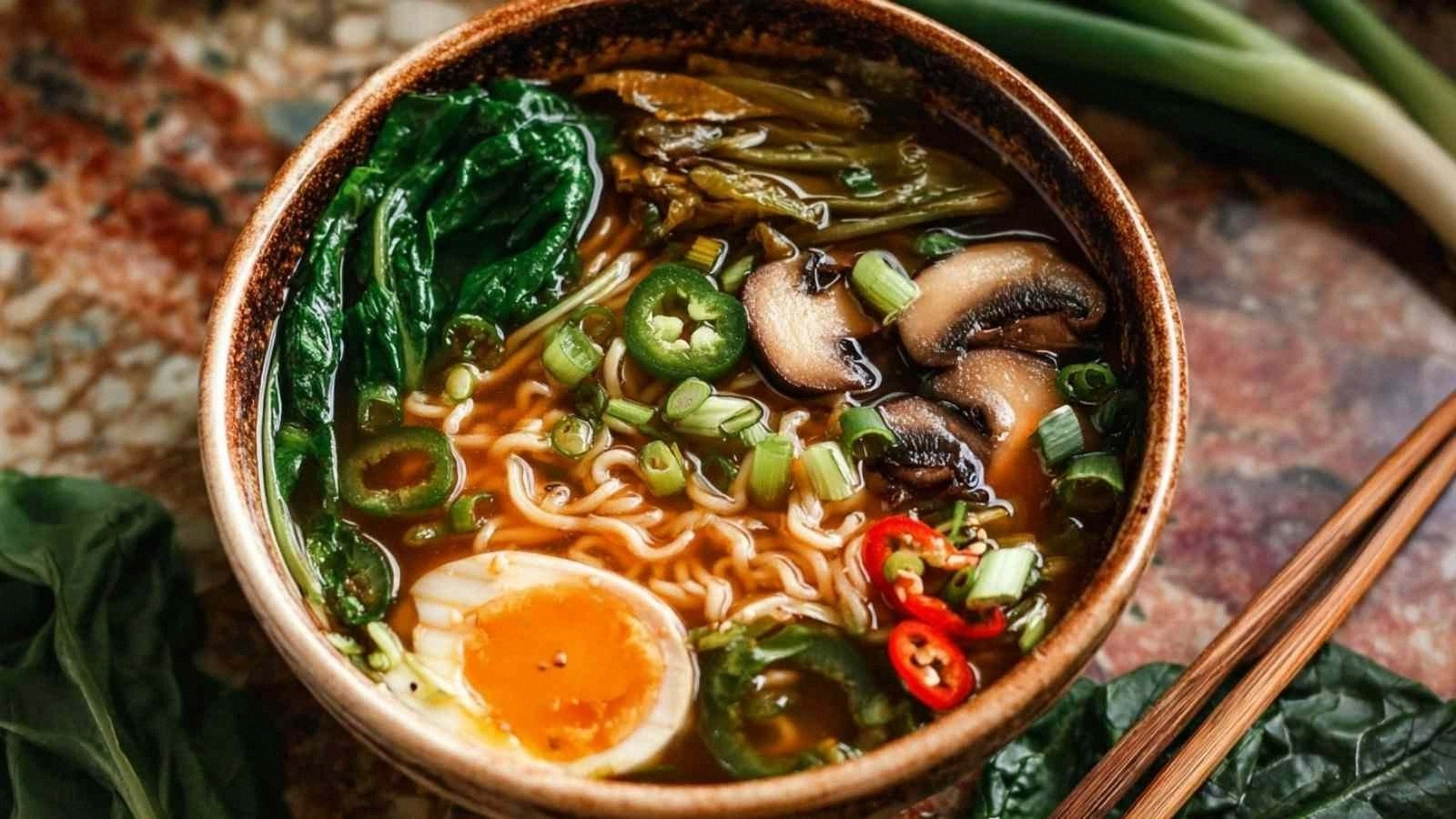
What makes this version of ramen stand out is that it doesn't just replace meat with tofu; it reimagines the entire flavor profile so that every element works in harmony. The miso paste provides depth, the Sriracha adds a punch of heat, and the nutritional yeast gives a subtle cheesy note that balances the earthiness of mushrooms. The combination of low-sodium vegetable broth and a splash of sesame oil creates a broth that is both light and rich. When you add the soft-boiled eggs, the yolks become a silky sauce that ties everything together. The result is a bowl that feels indulgent but is surprisingly clean and healthy.
Picture yourself pulling this bowl out of the pot, steam rising like a cloud of savory mist, and the aroma of green onions and garlic filling the kitchen. Imagine the first spoonful—warm, silky, and with just enough spice to wake your senses. This isn’t just a meal; it’s a moment of comfort that turns an ordinary evening into a culinary celebration. I dare you to taste this and not go back for seconds. If you’ve ever struggled with making ramen that feels both filling and nutritious, you’re not alone—this is the fix you’ve been missing.
Most recipes get this completely wrong by overcooking the noodles or underseasoning the broth. Here’s what actually works: a short, quick sauté of aromatics, a simmer that allows the miso and soy sauce to meld, and a final burst of fresh jalapeño and green onion just before serving. The result is a bowl that delivers protein, fiber, and flavor without the heaviness of fried or processed meats. I’ll be honest—after making this, I ate half the batch before anyone else got a chance to taste it. This is hands down the best version you'll ever make at home, and I’m ready to show you why.
What Makes This Version Stand Out
- Taste: The broth is a layered symphony of umami, heat, and subtle sweetness, thanks to miso, Sriracha, and a dash of soy sauce. It coats the noodles like velvet, ensuring every bite is rich and satisfying.
- Texture: The baby portobello mushrooms retain a meaty chew, while the tofu slices crisp up on the edges. The soft-boiled eggs melt into the broth, adding silky creaminess that balances the dish.
- Protein: With tofu, edamame, and eggs, this ramen delivers more than 25 grams of protein per serving, making it a powerhouse for muscle repair and satiety.
- Freshness: The green onions and jalapeño are added at the end, preserving their bright, sharp flavors and giving the soup a vibrant finish.
- Health‑Forward: Low-sodium broth, minimal added oils, and a focus on plant‑based proteins keep the calorie count low while maximizing nutrition.
- Versatility: Swap in any protein or veggie you love—shrimp, tempeh, or kale—without compromising the core flavor profile.
- Make‑Ahead Friendly: The broth can be stored for up to five days, and the noodles can be pre-cooked and reheated in minutes, making this a perfect meal prep option.
- Social Appeal: Friends who think ramen is only for quick takeout will be amazed by the depth and complexity of this bowl.
Alright, let's break down exactly what goes into this masterpiece...
Inside the Ingredient List
The Flavor Base
The low-sodium vegetable broth is the foundation of this ramen, providing a clean canvas that allows the other flavors to shine. By keeping the salt content low, you have full control over seasoning, which is especially important when you’re adding miso, soy sauce, and Sriracha later. If you skip the broth, the soup becomes dry and the noodles soak up too much liquid, losing their al dente bite. A good tip is to use a homemade broth simmered with kombu and shiitake mushrooms for an even richer umami base.
The Texture Crew
Baby portobello mushrooms bring a meaty, earthy chew that mimics the texture of traditional ramen pork belly. Slice them thinly to allow the flavors to infuse quickly, but keep a few thicker slices for a satisfying bite. The extra-firm tofu, when pressed and sliced, offers a firm bite that contrasts nicely with the soft eggs and noodles. If tofu is too greasy for you, pat it dry and use a non-stick pan to reduce oil absorption. The frozen shelled edamame adds a pop of color and a subtle nutty flavor; thaw them quickly in a hot pan to avoid a mushy texture.
The Unexpected Star
Soft-boiled eggs are the secret to a creamy, silky broth. The yolk, when broken, turns into a natural emulsifier that ties the soup together. The trick is to cook the eggs just until the whites are set but the yolks remain runny; this takes about 7 minutes from the moment they hit boiling water. If you prefer a firmer yolk, simply increase the time to 9 minutes. The eggs also provide a subtle richness that balances the spicy and salty elements of the broth.
The Final Flourish
Green onions and jalapeño add a bright, fresh finish that cuts through the richness of the broth. Slice the green onions into thin rings so they release their flavor quickly, and dice the jalapeño finely to distribute heat evenly. For a milder version, remove the seeds or use a sweet pepper instead. A splash of sesame oil at the end gives a nutty aroma that elevates the entire dish. Lastly, the nutritional yeast provides a savory, cheesy note that enhances the umami profile without adding dairy.
Everything's prepped? Good. Let's get into the real action...
The Method — Step by Step
- Heat a large pot over medium heat and drizzle 1½ teaspoons of avocado oil. Add the minced garlic and sliced jalapeño, cooking until the garlic turns fragrant and the jalapeño softens, about 2 minutes. This is the moment of truth; the aroma should hint at the depth that will unfold in the broth.
- Add the sliced baby portobello mushrooms and cook, stirring occasionally, until they release their juices and start to brown, about 4 minutes. The mushrooms should look like they’re holding a tiny steam cloud.
- Stir in the diced tofu, ensuring each piece is coated with the garlic‑jalapeño mixture. Sauté for 3 minutes, flipping once, until the tofu edges become golden and slightly crisp. This step adds a satisfying crunch that contrasts the soft eggs.
- Pour in 4 cups of low‑sodium vegetable broth and bring to a gentle boil. Reduce heat to a simmer, then stir in the miso paste and 1 tablespoon of Sriracha, whisking until fully dissolved. The broth should have a clear, amber hue and a balanced heat.
- Add the frozen shelled edamame and 1½ tablespoons of low‑sodium soy sauce. Simmer for another 5 minutes, allowing the flavors to mingle and the edamame to warm through. The broth should now smell toasty and savory.
- Meanwhile, bring a separate pot of water to a rolling boil and add 4 oz of uncooked ramen noodles. Cook for 3 minutes, then drain and set aside. The noodles should still be slightly firm; they’ll finish cooking in the soup.
- Add the cooked noodles to the pot, gently folding them into the broth. Let them simmer for 2 minutes to absorb the flavors. The noodles should be al dente and coated with the silky broth.
- Place the soft‑boiled eggs on top of the soup, slice them open, and sprinkle the green onions, a drizzle of sesame oil, and 2 tablespoons of nutritional yeast. The final garnish should look vibrant, with the green onion rings adding a crisp pop and the yeast giving a subtle cheesy aroma.
That's it — you did it. But hold on, I've got a few more tricks that'll take this to another level...
Insider Tricks for Flawless Results
The Temperature Rule Nobody Follows
Many people think any simmer works, but the broth needs to be at a gentle boil to extract maximum flavor from miso and soy sauce. Keep the heat low enough that bubbles are small and steady; this prevents the broth from becoming cloudy or losing its silky texture. A friend once over‑simmered the soup and the miso separated, turning the broth into a gritty mess.
Why Your Nose Knows Best
Smell the broth after adding miso and before adding soy sauce. A sweet, umami aroma indicates that the miso has fully dissolved; if it still tastes raw, give it a minute more. Your nose is your best judge of when the broth is ready to receive the final seasoning.
The 5‑Minute Rest That Changes Everything
After removing the pot from heat, let the soup rest for 5 minutes. This allows the flavors to marry and the noodles to finish cooking in the residual heat. When you pour the soup into bowls, the steam will be at its peak, delivering a sensory experience that feels like a hug.
Keep the Edamame Fresh
Use frozen shelled edamame because they’re pre‑cooked and retain their bright green color. Thaw them in a hot pan for 30 seconds before adding to the broth to avoid a soggy texture. If you use fresh edamame, blanch them quickly in boiling water for 2 minutes.
Serve Immediately
Ramen is best enjoyed hot. If you need to serve later, keep the soup warm in a double‑boiler or a slow‑cooker set to low. Adding a splash of hot water before reheating can help restore the broth’s silky consistency.
The 1‑Minute Topping Trick
Just before serving, add a splash of sesame oil and a few drops of Sriracha. This last-minute burst of flavor ensures that every spoonful is vibrant and balanced.
Creative Twists and Variations
This recipe is a playground. Here are some of my favorite ways to switch things up:
Spicy Kimchi Ramen
Swap the jalapeño for a handful of chopped kimchi, and add a teaspoon of gochujang. The fermented tang adds depth and a fiery kick that pairs beautifully with the tofu.
Herb‑Infused Ramen
Introduce a handful of fresh basil or cilantro after the broth has simmered. The herbs add a bright, citrusy aroma that lifts the entire dish.
Veggie‑Loaded Ramen
Throw in sliced carrots, spinach, or bok choy during the last minute of simmering. The vegetables add color, crunch, and a nutritional boost.
Cheesy Ramen
Replace nutritional yeast with a sprinkle of grated Parmesan or a splash of coconut milk. The result is a creamy, indulgent broth that still keeps the protein high.
Low‑Carb Ramen
Use shirataki noodles instead of ramen noodles. They’re low in carbs and absorb the broth’s flavors, making for a light yet satisfying meal.
Protein‑Packed Powerhouse
Add a scoop of plant‑based protein powder to the broth after it has simmered. Stir until dissolved for an extra protein boost that doesn’t alter the flavor.
Storing and Bringing It Back to Life
Fridge Storage
Cool the soup completely before transferring it to a sealed container. Store in the refrigerator for up to five days. The broth will thicken slightly, so add a splash of water when reheating to restore its silky texture.
Freezer Friendly
For longer storage, freeze the soup in individual portions. It will keep for up to three months. Thaw overnight in the fridge and reheat on the stove, adding a little broth or water to loosen it.
Best Reheating Method
Reheat on low heat, stirring occasionally. When the soup is hot, add a teaspoon of sesame oil and a dash of Sriracha to refresh the flavors. Serve immediately for the best experience.