
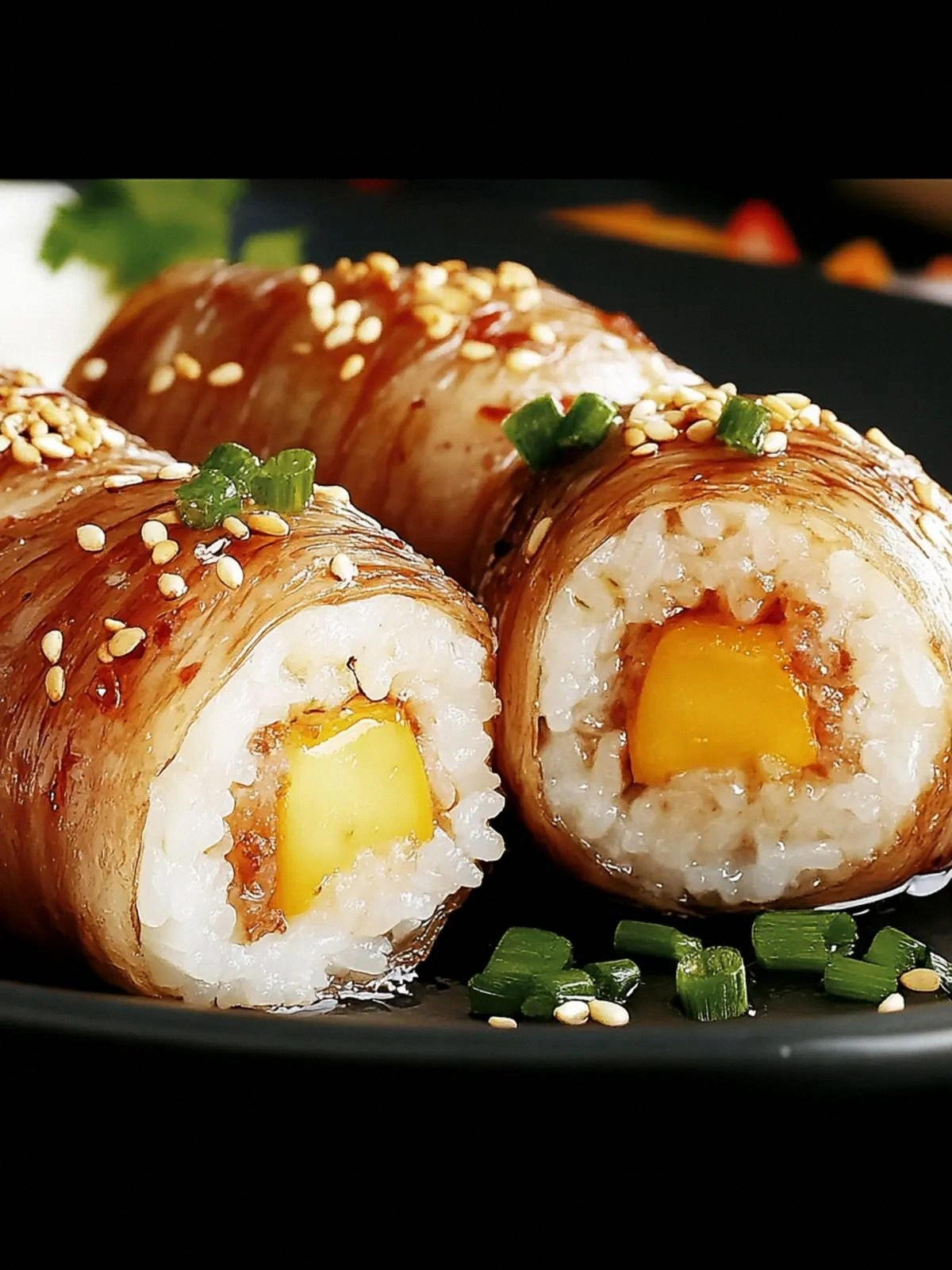
Picture this: you’re halfway through a frantic dinner prep, the kitchen smells like a smoky barbecue, and suddenly you’re hit with a craving that feels like a culinary dare. That night, a friend challenged me to whip up something that could stand up to the boldness of a sizzling steak yet still be as comforting as a warm hug. I turned to my pantry, rummaged through the rice drawer, and decided it was time for a new hero—pork‑wrapped rice balls that marry savory, sweet, and a hint of herbal zest into one bite‑sized marvel.
When the first rice ball hit the skillet, the sizzling sound was almost a drumbeat of anticipation. The aroma that filled the air was a rich tapestry of soy, sake, and a whisper of ginger—like a secret garden opening its gates. Every bite delivers a burst of umami that lingers, followed by a subtle sweetness that balances the pork’s natural fattiness. The texture? Imagine a fluffy core that gives way to a slightly crisped exterior, like a snowflake that melts into a golden kiss.
What makes this version stand out is not just the flavor; it’s the method. I discovered that wrapping the rice in thin pork belly slices creates a seal that locks in moisture, while the quick sear caramelizes the outside, giving you that coveted contrast. The recipe also incorporates perilla leaves, a Japanese herb that offers a minty, citrusy lift that’s rarely seen in rice dishes. And, believe it or not, the tiny splash of mirin and sugar in the sauce turns a simple stir‑fry into a velvet‑smooth glaze that coats every grain.
By the end of this guide, you’ll have a dish that looks like it came from a high‑end ramen shop, tastes like a comfort food staple, and can be whipped up in under half an hour. Let me walk you through every single step—by the end, you’ll wonder how you ever made it any other way.
What Makes This Version Stand Out
- Flavor: The combination of soy, sake, mirin, and sugar creates a glaze that’s both sweet and savory, coating the rice like velvet while the pork delivers a smoky undertone.
- Texture: The thin pork belly crisps on the edges, producing a satisfying crunch that contrasts with the pillowy rice inside.
- Simplicity: With only ten ingredients, you can assemble a dish that feels gourmet without the hassle of complicated steps.
- Ingredient Quality: Using Japanese short‑grain rice and fresh perilla leaves elevates the dish beyond the ordinary.
- Crowd Reaction: Friends who’ve tried this say the first bite is a revelation—“I dare you to taste this and not go back for seconds.”
- Make‑ahead Potential: These rice balls can be assembled ahead of time, frozen, and reheated with minimal loss of flavor.
- Uniqueness: The use of perilla leaves and toasted sesame seeds gives a distinct aroma that sets it apart from other pork‑rice combos.
- Versatility: The base can be swapped for other proteins or vegetables without losing its core identity.
Inside the Ingredient List
The Flavor Base
At the heart of this dish lies a simple yet powerful sauce. The Japanese soy sauce, sake, and mirin form a trio that balances saltiness with subtle sweetness. The sugar, though minimal, caramelizes during the searing process, giving the glaze a glossy sheen that’s impossible to resist. If you’re watching sodium, you can reduce the soy sauce by a tablespoon, but then you’ll need to compensate with a pinch of salt later.
The Texture Crew
The rice itself is the foundation. Japanese short‑grain rice is prized for its sticky yet distinct grains, which hold together when wrapped. The cornstarch, sprinkled over the rice, creates a light coating that helps the rice balls keep their shape without sticking to the pan. A pinch of sesame seeds adds a nutty crunch that pops with every bite. If you’re on a gluten‑free diet, cornstarch is a perfect substitute for wheat flour or other binders.
The Unexpected Star
Perilla leaves, or shiso, are the secret weapon that elevates this dish from good to unforgettable. Their bright green hue and fresh, almost citrusy aroma provide a counterpoint to the rich pork and soy glaze. When you bite into a rice ball, the perilla releases a burst of herbal freshness that lifts the entire flavor profile. If perilla is hard to find, a thin slice of fresh mint can be an acceptable stand‑in, though the flavor will differ slightly.
The Final Flourish
Ginger and garlic are the aromatic duo that gives depth to the sauce. Fresh grated ginger brings a sharp, zesty bite that cuts through the richness of the pork, while garlic adds a mellow, earthy undertone. Toasted sesame seeds, added at the end, provide a subtle crunch and a nutty aroma that ties the dish together. If you’re sensitive to spice, you can reduce the ginger to half a teaspoon, but be prepared for a slightly less vibrant sauce.
Everything’s prepped? Good. Let’s get into the real action…
The Method — Step by Step
- Prepare the Rice: Rinse 300 g of short‑grain rice until the water runs clear, then cook it according to package instructions. Once cooked, fluff the rice with a fork, sprinkle with 1 tbsp cornstarch, and mix until every grain is lightly coated. Let the rice cool to room temperature; this ensures it’s not too hot when you handle it, preventing the pork from cooking too quickly.
- Make the Sauce: In a small saucepan, combine 3 tbsp soy sauce, 3 tbsp sake, 2 tbsp mirin, and 1 tbsp sugar. Heat over medium heat until the sugar dissolves, then add 1 tsp grated ginger and 1 tsp grated garlic. Let the mixture simmer for 2 minutes, stirring occasionally. Remove from heat and set aside. The sauce should thicken slightly; if it’s too thin, give it another minute on low heat.
- Prep the Pork: Lay out 9 slices of thinly sliced pork belly on a clean cutting board. Brush each slice lightly with ½ tbsp cooking oil. This prevents sticking and ensures an even sear. If your pork belly has a thick fat layer, trim a thin strip off to keep the rice from becoming greasy.
- Wrap the Rice: Take a handful of rice (about 50–60 g) and shape it into a small oval or cylinder. Place a slice of pork belly on top, then fold the pork around the rice, securing it with a toothpick if needed. Repeat with the remaining rice and pork slices. The goal is a snug, sealed package that holds together during cooking.
- Season the Perilla: Cut 6 perilla leaves into thin strips. Lightly dust them with a pinch of toasted sesame seeds and set aside. These will be used to finish the dish, adding a burst of green color and fresh aroma.
- Sear the Rice Balls: Heat a non‑stick skillet over medium‑high heat. Place the wrapped rice balls seam‑side down and let them sear for 3–4 minutes until the pork develops a golden crust. Flip each ball and cook the other side for another 3–4 minutes. The rice should be warm and slightly firm, while the pork remains juicy.
- Add the Sauce: Reduce the heat to medium and pour the prepared sauce over the rice balls. Stir gently to coat each ball evenly. The glaze should cling to the pork, creating a glossy sheen. Let the mixture simmer for 2–3 minutes, allowing the rice to absorb the flavors.
- Finish with Perilla: Sprinkle the toasted sesame seeds and perilla strips over the rice balls. Gently stir to distribute the herbs evenly. The perilla will release a bright aroma, and the sesame will add a subtle crunch.
- Serve Immediately: Plate the rice balls on a warmed dish and garnish with extra perilla leaves if desired. Serve hot, accompanied by a side of pickled vegetables or a light cucumber salad to cut through the richness.
That’s it — you did it. But hold on, I’ve got a few more tricks that’ll take this to another level.
Insider Tricks for Flawless Results
The Temperature Rule Nobody Follows
Many people think that high heat is always better, but for pork‑wrapped rice balls, a steady medium heat keeps the pork juicy while allowing the rice to warm through. If you’re using a gas stove, aim for a flame that’s just below the red zone. This prevents the pork from burning on the outside while the inside remains undercooked.
Why Your Nose Knows Best
Before you even touch the skillet, sniff the sauce. A balanced sauce should smell like a sweet‑savory umami broth. If it smells overwhelmingly sweet, you’ve added too much sugar; if it’s too salty, reduce the soy sauce. Your nose is a great quality control tool.
The 5‑Minute Rest That Changes Everything
After searing, let the rice balls rest for 5 minutes before adding the sauce. This resting period allows the pork’s fat to redistribute, preventing the rice from absorbing too much oil. It also gives the rice a chance to firm up, so it doesn’t crumble when you flip.
Keep It Light with a Dash of Vinegar
A splash of rice vinegar added to the sauce can brighten the flavor profile and cut through the richness. Add 1 tsp just before you pour the sauce over the rice balls. It adds a subtle tang that makes the dish feel more balanced.
Make It Vegan, One Slice at a Time
If you’re aiming for a plant‑based version, swap the pork belly for thin slices of marinated seitan or tofu. Marinate the protein in a mixture of soy sauce, mirin, and a touch of miso before wrapping it around the rice. The result is a hearty, savory bite that’s entirely plant‑based.
Creative Twists and Variations
This recipe is a playground. Here are some of my favorite ways to switch things up:
Spicy Kimchi Fusion
Swap the perilla leaves for shredded kimchi and add a pinch of gochugaru (Korean chili flakes) to the sauce. The result is a fiery, tangy version that pairs well with a cool yogurt dip.
Herb‑Infused Sesame
Mix fresh chopped basil or cilantro into the sesame seeds before sprinkling them on the rice balls. The herb adds a fresh green note that contrasts with the savory pork.
Seafood Surprise
Use thin slices of smoked salmon or a small piece of grilled shrimp in place of pork. The smoky fish adds a luxurious texture, while the rice remains the comforting base.
Vegetarian Delight
Replace pork with thinly sliced eggplant or zucchini, marinated in soy sauce and mirin. The veggies absorb the sauce and become tender, creating a lighter alternative.
Asian‑Mexican Mash‑Up
Add a dash of lime juice and a sprinkle of chopped cilantro to the sauce. Serve the rice balls with a side of guacamole for a cross‑cultural twist.
Chocolate‑Covered Rice Balls
For a sweet twist, drizzle melted dark chocolate over the finished rice balls. The chocolate’s bitterness balances the savory glaze, making it a unique dessert option.
Storing and Bringing It Back to Life
Fridge Storage
Store cooked rice balls in an airtight container for up to 2 days. Keep them in the refrigerator at 4°C (39°F). The rice will stay firm, and the pork will retain its juiciness.
Freezer Friendly
Wrap each rice ball in parchment paper before placing them in a freezer bag. Freeze for up to 2 weeks. To reheat, pop them directly into a hot skillet for a few minutes; the pork will regain its crispness.
Best Reheating Method
For the freshest taste, reheat in a steamer for 5 minutes to keep the rice moist, then finish in a skillet with a splash of water. This small trick steams the rice back to perfection without drying out the pork.