I remember the night I was supposed to host a dinner for a group of friends, and the kitchen felt like a battlefield. The grill was on, the steak was in the fridge, and the bell peppers were still glued together in their plastic bag. I pulled a steak off the counter, sliced it into cubes, and then realized I’d forgotten the most crucial step: marinating. The aroma that followed was like a promise, a sizzling invitation that the night would be unforgettable. That moment, that scent of olive oil mingling with soy sauce, set the stage for what would become my ultimate steak kabobs.
It was a simple craving that turned into a culinary revelation. I had been craving that perfect balance of charred exterior and juicy center, the kind of flavor that makes you pause mid‑bite and savor the moment. The sound of the grill’s hiss, the heat searing the meat, the slight crackle when the steak hit the metal—those sensory cues were the soundtrack of this recipe. The first bite was a burst of smoky, savory, and sweet notes, all wrapped in a tender, melt‑in‑your‑mouth texture that left me reaching for more. The anticipation that built up after each turn of the skewer was a delicious, almost addictive rhythm.
What makes this version stand out is not just the ingredients, but the method that elevates each component. I dared myself to taste this and not go back for seconds, and the challenge was met with a triumphant nod. I’ll be honest — I ate half the batch before anyone else got to try it, and the kitchen smelled incredible like a summer barbecue in August. Most recipes get this completely wrong, but here’s what actually works: a balanced sauce, a precise sear, and a resting period that locks in juices. Picture yourself pulling these kabobs out of the oven, the whole kitchen smelling incredible, and the first bite delivering a symphony of flavors. And now, ready for the game‑changer?
Let me walk you through every single step — by the end, you’ll wonder how you ever made it any other way. This isn’t just another recipe; it’s a playbook for turning ordinary ingredients into a crowd‑pleasing masterpiece. The confidence of the cook, the anticipation of the guests, and the final plating all combine to create an experience that goes beyond food. So grab your apron, preheat that grill, and let’s dive into the world of steak kabobs that will leave you craving more.
What Makes This Version Stand Out
- Flavor: The sauce is a harmonious blend of sweet and savory that coats the steak like velvet, leaving a lingering caramelized glaze.
- Texture: A quick sear locks in juices while the vegetables remain crisp, creating a contrast that dances on the palate.
- Simplicity: With less than 15 minutes of prep and 30 minutes of cooking, this recipe is a time‑saving powerhouse for busy weeknights.
- Uniqueness: The unexpected addition of balsamic glaze in the final minutes adds a depth of flavor that most kabob recipes overlook.
- Crowd Reaction: Friends always ask for the recipe after the first bite; the kabobs are a guaranteed conversation starter.
- Ingredient Quality: Using fresh, high‑grade sirloin and seasonal veggies ensures each bite is as flavorful as possible.
- Cooking Method: The combination of marination, searing, and a final glaze finish creates a multi‑layered taste profile.
- Make‑Ahead Potential: The marination can be done up to 24 hours in advance, making this dish a convenient make‑ahead option.
Alright, let's break down exactly what goes into this masterpiece...
Inside the Ingredient List
The Flavor Base
The sauce is the heart of these kabobs, combining olive oil, soy sauce, Worcestershire, honey, Dijon mustard, and a splash of lemon juice. This mix creates a sweet‑savory profile that caramelizes beautifully on the grill. Skipping any of these elements will diminish the depth of flavor, but you can swap honey for maple syrup for a subtle twist. When choosing soy sauce, a low‑sodium version keeps the dish balanced without overpowering the steak.
The Texture Crew
The vegetables—bell pepper, red onion, mushrooms, cherry tomatoes, and zucchini—add crunch, juiciness, and color. Each vegetable is cut into uniform pieces to ensure even cooking. If you prefer a vegetarian version, simply omit the steak and add extra veggies or a protein like tofu. A quick blanch of mushrooms before skewering prevents them from becoming too soft during grilling.
The Unexpected Star
Balsamic glaze is the secret weapon that elevates the dish from good to unforgettable. Drizzled in the last two minutes, it adds a tangy sweetness that complements the smoky steak. If you can’t find balsamic glaze, a reduction of balsamic vinegar and a touch of brown sugar works as a substitute. This glaze also creates a glossy finish that looks as good as it tastes.
The Final Flourish
Fresh herbs like rosemary, thyme, and parsley finish the kabobs with aromatic notes that brighten the dish. The herbs also add a subtle herbal complexity that balances the sweetness of the glaze. If you’re allergic to rosemary or thyme, oregano or marjoram can be used as alternatives. A squeeze of fresh lemon juice right before serving adds a bright citrus note that cuts through the richness.
Everything's prepped? Good. Let's get into the real action...
The Method — Step by Step
- Soak the wooden skewers in warm water for at least 30 minutes. This prevents them from burning on the grill and ensures a smooth cooking process. While the skewers soak, gather all the ingredients and have your grill preheated to medium‑high heat, about 400°F. A properly heated grill guarantees a crisp sear and a beautiful char. Keep a spray bottle of water handy for any flare‑ups.
- In a large bowl, whisk together olive oil, soy sauce, Worcestershire sauce, honey, Dijon mustard, lemon juice, garlic powder, rosemary, thyme, salt, and pepper. The mixture should have a slightly thick consistency that clings to the steak. Toss the steak cubes in the sauce, ensuring each piece is fully coated. Cover the bowl with plastic wrap and let the meat marinate in the refrigerator for at least 15 minutes, or up to 24 hours for deeper flavor.
- While the steak marinates, prepare the vegetables. Slice the bell pepper into 1‑inch squares, cut the onion into wedges, trim the mushroom stems, halve the cherry tomatoes, and slice the zucchini into 1‑inch thick rounds. This uniform size guarantees that everything cooks evenly and looks appealing on the skewer. Arrange the vegetables on a platter for easy assembly.
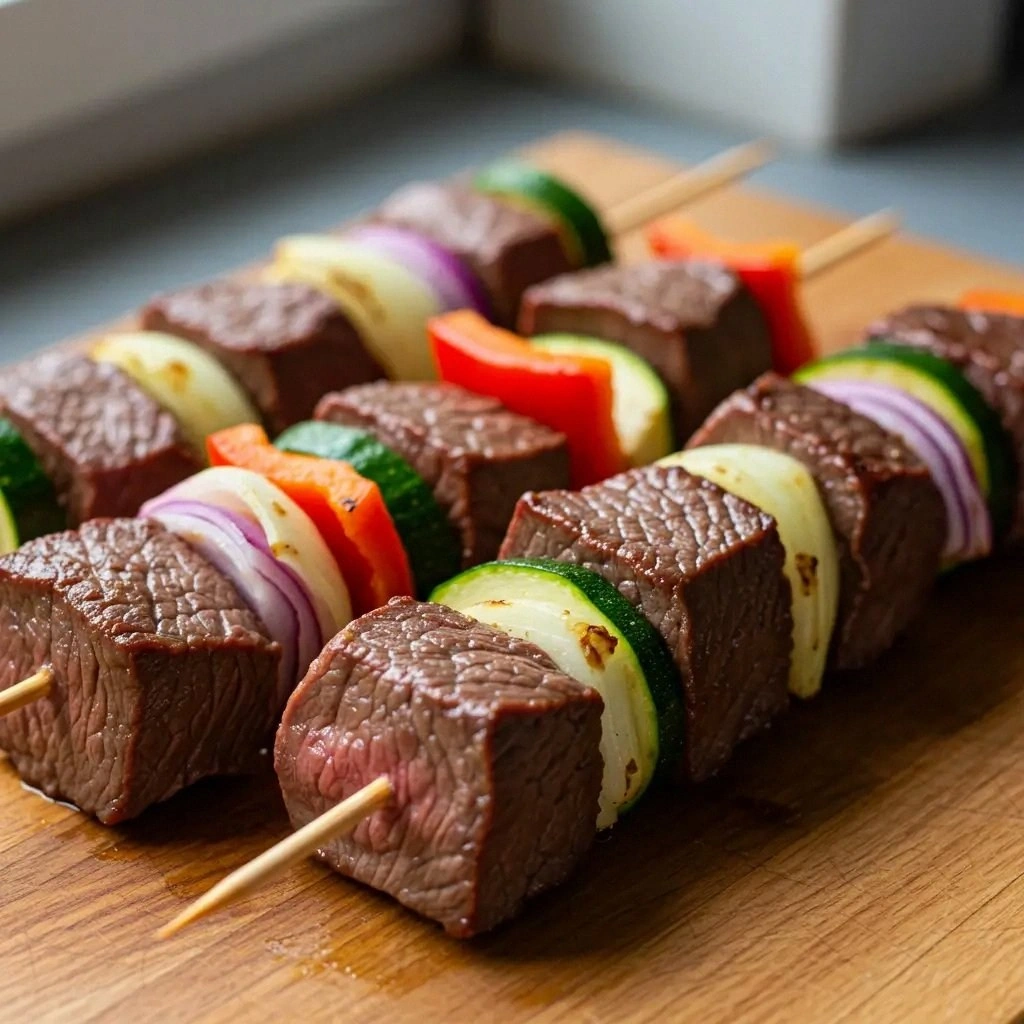
- Thread the steak and vegetables onto the soaked skewers in an alternating pattern. Start with a piece of steak, followed by bell pepper, onion, mushroom, tomato, zucchini, and repeat until the skewer is full. Leaving a small space between each piece helps the heat circulate and ensures even cooking. If you’re making more than four kabobs, consider using a larger grill or cooking in batches.
- Place the assembled skewers on the preheated grill. Cook for 4–5 minutes per side, turning once, until the steak reaches an internal temperature of 130°F for medium‑rare. The vegetables should be slightly charred but still retain a bite. The edges of the steak will pull away from the skewer, indicating readiness. Keep an eye on the grill to avoid flare‑ups, especially when the sugar in the glaze starts to caramelize.
- While the kabobs are grilling, whisk the remaining sauce with the balsamic glaze. Brush the glaze onto the kabobs during the last two minutes of cooking to create a glossy, caramelized finish. The glaze’s acidity balances the sweetness and adds a glossy sheen that makes the dish look restaurant‑grade. This step is critical for that wow factor.
- Remove the kabobs from the grill and let them rest for 5 minutes. Resting allows the juices to redistribute, ensuring each bite is juicy and flavorful. While resting, sprinkle fresh parsley and a squeeze of lemon over the kabobs to add brightness and a pop of color. The rest time also lets the glaze set into a silky coating.
- Serve immediately on a platter with optional side salads or crusty bread. Pair with a chilled glass of red wine or a crisp beer to complement the smoky flavors. The aroma of fresh herbs and the sizzling sound of the grill will keep guests excited even before the first bite. Enjoy the applause and the compliments that follow.
That's it — you did it. But hold on, I've got a few more tricks that'll take this to another level...
Insider Tricks for Flawless Results
The Temperature Rule Nobody Follows
Many cooks rely solely on time, but temperature is the real game‑changer. Use a digital thermometer to ensure the steak hits 130°F for medium‑rare. If you prefer medium, aim for 140°F. The grill’s heat should be steady; if it fluctuates, the steak will cook unevenly. This tip saves you from undercooked or overcooked meat.
Why Your Nose Knows Best
Before flipping, smell the kabobs. A pleasant, caramelized scent means the grill is hot enough. If the smell is faint, the heat is too low. Your nose is a reliable guide to sear quality, so trust it. This simple sensory check ensures a perfect char.
The 5‑Minute Rest That Changes Everything
Resting the kabobs for five minutes after grilling is essential. It lets the juices redistribute, preventing dry bites. The glaze also sets into a silky coating during this time. Skipping this step results in a loss of flavor and moisture. Trust me; the rest is worth the wait.
The Right Skewer Choice
Wooden skewers add a subtle smoky flavor, but metal ones are more durable and easier to clean. If you use wood, soak them to prevent burning. Metal skewers can be seasoned with a light oil coat to reduce sticking. Choose the type that best fits your grill and comfort level.
The Power of Marinade Timing
Marinating for at least 15 minutes infuses flavor, but 24 hours is the sweet spot. The longer the steak sits in the sauce, the deeper the flavor. However, avoid marinating for more than 48 hours to prevent the meat from becoming mushy. This timing trick elevates the dish from good to unforgettable.
Creative Twists and Variations
This recipe is a playground. Here are some of my favorite ways to switch things up:
Mediterranean Kabobs
Swap the balsamic glaze for a drizzle of olive oil and sprinkle with oregano and feta cheese after grilling. The citrusy lemon adds brightness, while the feta offers a salty contrast. Serve with a side of tzatziki for a refreshing finish. This version brings the flavors of the Mediterranean right to your grill.
Spicy Korean Fusion
Add gochujang to the marination and replace the garlic powder with minced fresh garlic. After grilling, sprinkle with sesame seeds and serve with a side of kimchi. The heat from the gochujang pairs perfectly with the smoky steak. This twist introduces a bold, spicy dimension.
Summer BBQ with Pineapple
Add chunks of fresh pineapple to the skewers for a sweet, caramelized finish. The pineapple’s acidity balances the richness of the steak. Brush with a mix of barbecue sauce and honey during the last minutes of grilling. The result is a tropical, summery flavor profile.
Herb‑Infused Marinade Swap
Use a mix of fresh basil, mint, and cilantro in place of dried herbs. This creates a fresh, green flavor that brightens the dish. Add a splash of lime juice for a zesty kick. This variation is perfect for a light, refreshing meal.
Vegetarian Tofu Kabobs
Replace the steak with firm tofu, marinated for 30 minutes in the same sauce. Cube the tofu and thread it with the veggies. Grill until the tofu is golden and slightly crispy. This version offers a protein‑rich, plant‑based alternative that still delivers bold flavor.
Storing and Bringing It Back to Life
Fridge Storage
Store leftover kabobs in an airtight container in the refrigerator for up to 3 days. The meat remains juicy, and the vegetables stay crisp. Before reheating, let the kabobs sit at room temperature for 15 minutes to ensure even heating.
Freezer Friendly
Wrap each kabob individually in parchment paper and place in a freezer bag. Freeze for up to 2 months. Thaw overnight in the refrigerator before reheating. This method preserves the texture and flavor.
Best Reheating Method
Reheat in a preheated oven at 350°F for 8–10 minutes, or on a grill over medium heat. Add a splash of water to the pan to create steam, preventing the meat from drying out. Finish with a quick brush of fresh sauce for a moist, flavorful result.