Love this? Pin it for later! 📌
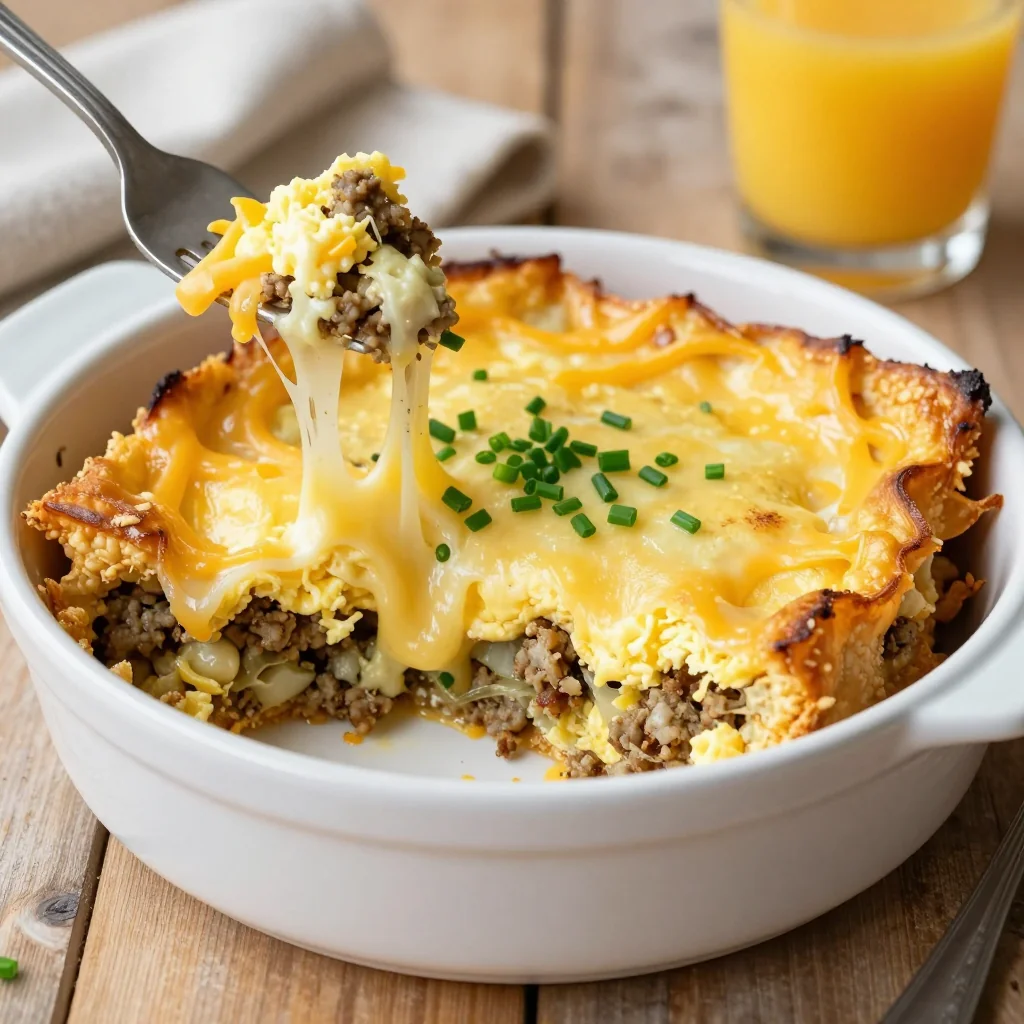
Imagine waking up to the aroma of sizzling sausage, fluffy eggs, and melted cheese—without lifting a finger before your first cup of coffee. That’s the magic of this freezer breakfast sausage and egg casserole, a make-ahead marvel that has rescued my busy mornings more times than I can count.
I first developed this recipe during the chaos of back-to-school season three years ago. Between packing lunches, finding matching socks, and trying to get everyone out the door, breakfast had become an afterthought—until this casserole entered our lives. Now, on Sunday evenings, I assemble two pans: one for Monday morning and one to freeze for those inevitable crazy weeks. The result? A hearty, protein-packed breakfast that goes from freezer to table in under 30 minutes, tasting every bit as fresh as the day it was made.
What makes this casserole special isn’t just the convenience (though that’s a huge perk). It’s the way the savory breakfast sausage mingles with the custardy eggs, how the sharp cheddar melts into every nook and cranny, and how the hint of mustard powder adds just enough complexity to make your tastebuds sing. Whether you’re feeding a houseful of holiday guests, meal-prepping for busy workweeks, or simply want to treat yourself to something special on a Tuesday, this freezer-friendly breakfast casserole delivers big on flavor with minimal effort.
Why This Recipe Works
- Freezer-Perfect Texture: The custard base prevents ice crystals, so it bakes up fluffy—not watery—straight from frozen.
- Make-Ahead Friendly: Assemble in 15 minutes, freeze up to 3 months, and bake whenever hunger strikes.
- Feed a Crowd: One 9×13 pan yields 12 generous slices—ideal for brunch parties or big families.
- Customizable: Swap sausage for bacon, use gluten-free bread, or add veggies—details below!
- Protein Powerhouse: 24 g protein per slice keeps you satisfied until lunch, no mid-morning crash.
- Minimal Cleanup: One bowl, one pan, and no morning dishes when you bake straight from frozen.
Ingredients You'll Need
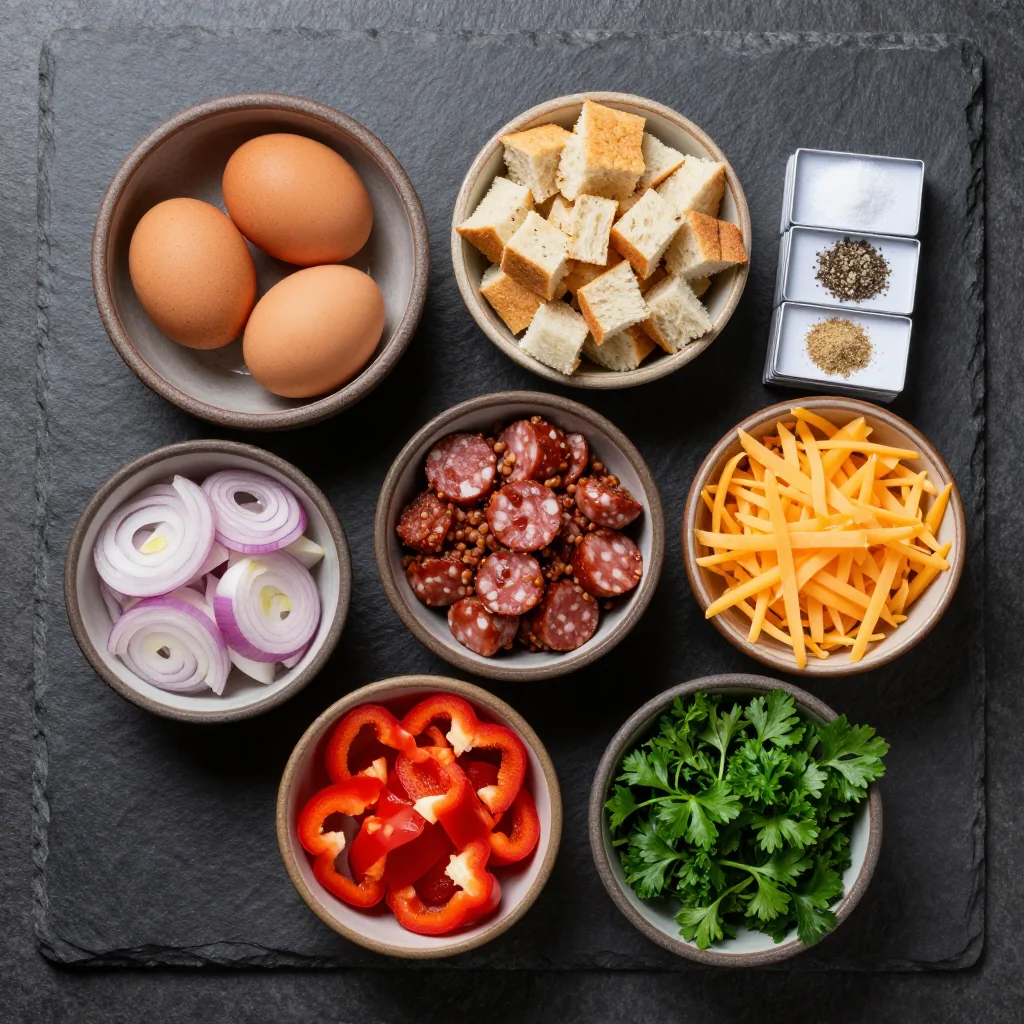
This casserole celebrates everyday staples, but a few quality choices elevate the final flavor. Below, I walk you through each component and share my grocery tips so you can shop once and eat well all month.
Protein Power
- Breakfast sausage: I use 1 pound of Jimmy Dean Natural or Wellshire Farms for lower sodium. Choose mild or spicy depending on your crew. Turkey sausage works; just add 1 Tbsp olive oil to compensate for leanness.
- Eggs: 12 large eggs create a silky custard. Room-temperature eggs blend more smoothly, so set them on the counter while the sausage cooks.
Bread Base
- Day-old bread: 6 packed cups of ¾-inch cubes. Sourdough adds tang, challah brings sweetness, and whole-grain ups the fiber. Stale bread soaks up the custard without turning mushy—perfect for using that half-loaf you forgot on the counter.
Dairy & Cheese
- Whole milk: 2 cups. Fat equals richness and prevents icy texture post-freeze. Substitute half-and-half for special occasions or 2 % plus 2 Tbsp melted butter in a pinch.
- Sharp cheddar: 2 cups freshly shredded. Pre-shredded cellulose can make the casserole grainy—grab the block and shred it yourself in 90 seconds.
- Cream cheese (optional): 4 oz cubed for pockets of melty tang. Totally optional but highly recommended for holiday brunches.
Flavor Boosters
- Dijon mustard: 1 Tbsp for subtle depth. Whole-grain mustard looks pretty if serving guests.
- Hot sauce: ½ tsp for brightness without heat; increase to 1 tsp if you like a gentle kick.
- Green onions: ¼ cup sliced for color and freshness. Swap chives or parsley if that’s what you have.
How to Make Freezer Breakfast Sausage and Egg Casserole for Mornings
Brown the sausage
Heat a large skillet over medium. Add sausage, breaking it into small crumbles with a wooden spoon. Cook until no pink remains, 6–7 minutes. Transfer to a paper-towel-lined plate to cool slightly and absorb excess grease. This prevents a soggy casserole.
Cube the bread
While the sausage cooks, cut or tear day-old bread into ¾-inch cubes. You want 6 packed cups—about 10 oz. Stale bread soaks up the custard without disintegrating. If your bread is fresh, cube it and toast at 300 °F for 10 minutes to dry it out.
Whisk the custard
In a large bowl, whisk eggs until homogenous. Whisk in milk, Dijon, hot sauce, salt, pepper, and garlic powder. The goal is to incorporate air for a fluffy bake—whisk vigorously for 30 seconds until the mixture is pale yellow and slightly frothy.
Assemble the layers
Grease a 9×13-inch metal or ceramic baking dish. Scatter half the bread cubes, top with half the sausage and half the cheddar. Repeat layers, ending with cheese. Tuck cream-cheese cubes randomly for surprise pockets of richness.
Soak overnight (or flash soak)
Pour custard evenly over layers. Press bread down with a spatula to submerge. Cover with greased foil and refrigerate at least 2 hours or up to 24. Short on time? Let stand 30 minutes at room temp, pressing occasionally so bread absorbs liquid.
Flash freeze (make-ahead key)
If you plan to freeze, cover the unbaked casserole tightly with two layers of plastic wrap and one of foil. Freeze on a flat shelf 4 hours or until solid, then remove dish and store the block in a labeled zip bag—your pan stays free for other uses.
Bake from frozen
Preheat oven to 350 °F. Remove plastic, cover with foil, and place frozen casserole on a rimmed sheet to catch drips. Bake 45 minutes, uncover, then bake 20–25 minutes more until the center registers 165 °F and the top is golden.
Rest and serve
Let stand 10 minutes to set the custard. Slice into 12 squares using a sharp knife and a pie server. Garnish with extra green onions or a drizzle of maple syrup if you like sweet-savory vibes.
Expert Tips
Temp check = fluffy success
An instant-read thermometer is your insurance policy. Pull the casserole at 165 °F—any hotter and eggs tighten, turning rubbery.
Blot the sausage
Those paper towels aren’t optional; removing surface grease keeps the custard silky, not separated.
Use a metal dish for faster thaw
Metal conducts heat quicker than ceramic, shaving 10 minutes off bake time—crucial when the kids are “staaaarving.”
Color = flavor
Add a handful of baby spinach or diced red pepper between layers for veggie skeptics—they’ll wilt into near-invisibility while boosting nutrients.
Label everything
Include bake-from-frozen instructions right on the foil with a Sharpie. Future you (or your spouse) will thank you.
Overnight fridge option
If you know you’ll bake within 24 hours, simply refrigerate the assembled casserole. Morning of, slide straight into the oven—no extra thaw time.
Variations to Try
-
Southwestern
Swap cheddar for pepper jack, add 1 cup frozen corn and 1 tsp cumin. Serve with salsa and avocado.
-
Mediterranean
Use Italian chicken sausage, sun-dried tomatoes, and spinach. Replace cheddar with crumbled feta.
-
Vegetarian
Sub 1 pound sautéed mushrooms and bell peppers for sausage. Add ½ tsp smoked paprika for “meaty” depth.
-
Gluten-Free
Use a sturdy gluten-free artisan loaf; avoid airy sandwich bread which disintegrates. Check sausage label for hidden wheat.
-
Mini Meal Prep
Bake in a greased 12-cup muffin tin for 20–22 minutes. Cool, flash-freeze, then store in a bag for grab-and-go portions.
-
Sweet-Savory Maple
Drizzle 2 Tbsp pure maple syrup over the top before baking. The caramelized edges taste like breakfast at a Vermont B&B.
Storage Tips
Freezer (Raw)
Wrap unbaked casserole (removed from dish) in plastic, then foil, or use a reusable silicone bag. Freeze up to 3 months. For best texture, bake within 2 months.
Freezer (Baked)
Cool completely, cut into squares, and flash-freeze on a tray. Once solid, transfer to bags. Reheat single squares in microwave 60–90 seconds or oven 12 minutes at 325 °F.
Refrigerator
Baked leftovers keep 4 days tightly covered. Reheat squares at 325 °F for 12 minutes or microwave 45 seconds with a damp paper towel to restore moisture.
Thawing
Overnight in fridge is safest. In a rush? Bake from frozen—just add 15 extra minutes under foil.
Frequently Asked Questions
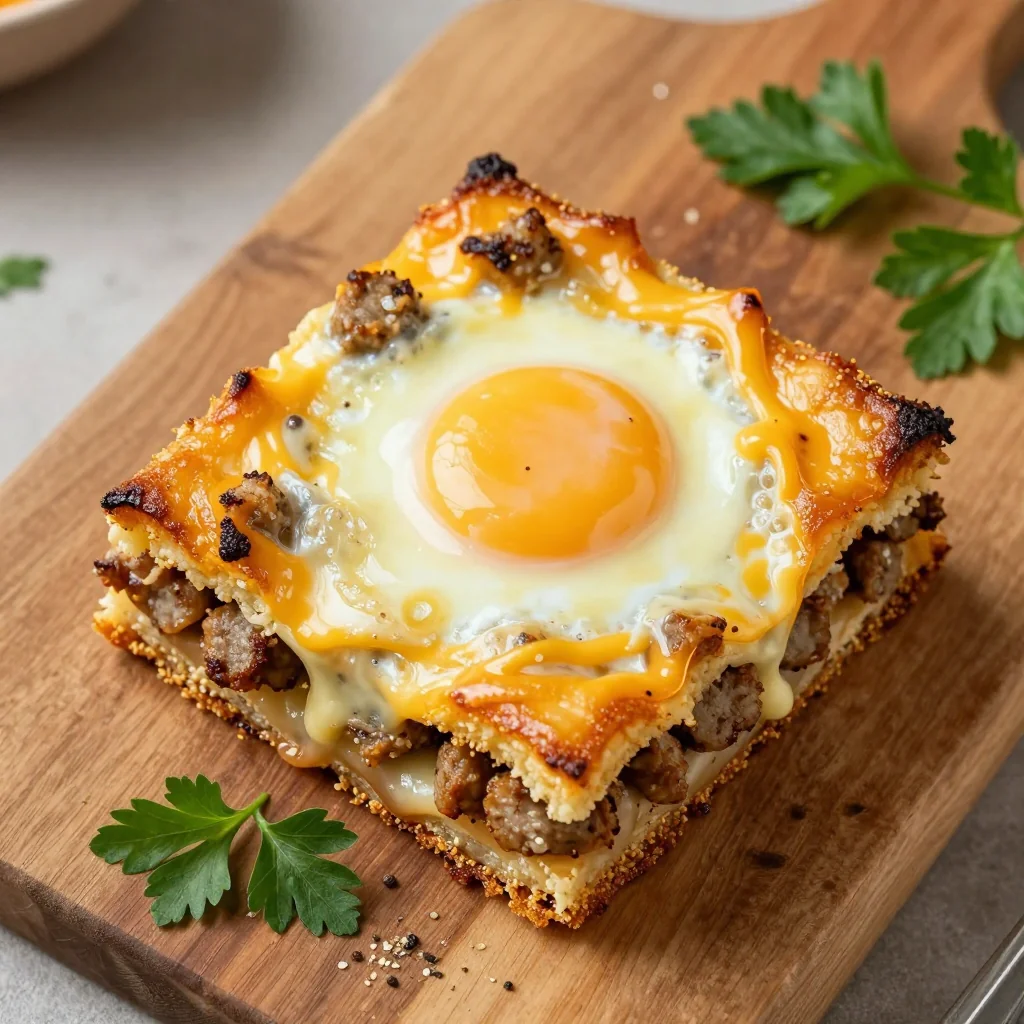
Freezer Breakfast Sausage and Egg Casserole for Mornings
Ingredients
Instructions
- Brown sausage: Cook sausage in skillet over medium heat, breaking into crumbles until no pink remains, 6–7 min. Drain on paper towels.
- Prep bread: Cube stale bread into ¾-inch pieces. If fresh, toast cubes 10 min at 300 °F to dry.
- Make custard: Whisk eggs until frothy, then whisk in milk, Dijon, hot sauce, salt, pepper, and garlic powder.
- Assemble: Grease 9×13 dish. Layer half the bread, half the sausage, half the cheddar. Repeat. Dot with cream-cheese cubes.
- Soak: Pour custard evenly. Press down to submerge bread. Cover and refrigerate 2 hours–24 hours, or flash-soak 30 min at room temp.
- Freeze (optional): Wrap unbaked casserole tightly and freeze up to 3 months.
- Bake: If frozen, cover with foil and bake 45 min at 350 °F, uncover and bake 20–25 min more until center is 165 °F. Rest 10 min, slice, and serve.
Recipe Notes
For make-ahead ease, bake one casserole fresh and freeze a second. Always label with bake-from-frozen instructions. Reheat single squares in microwave 60–90 seconds or oven 325 °F for 12 minutes.