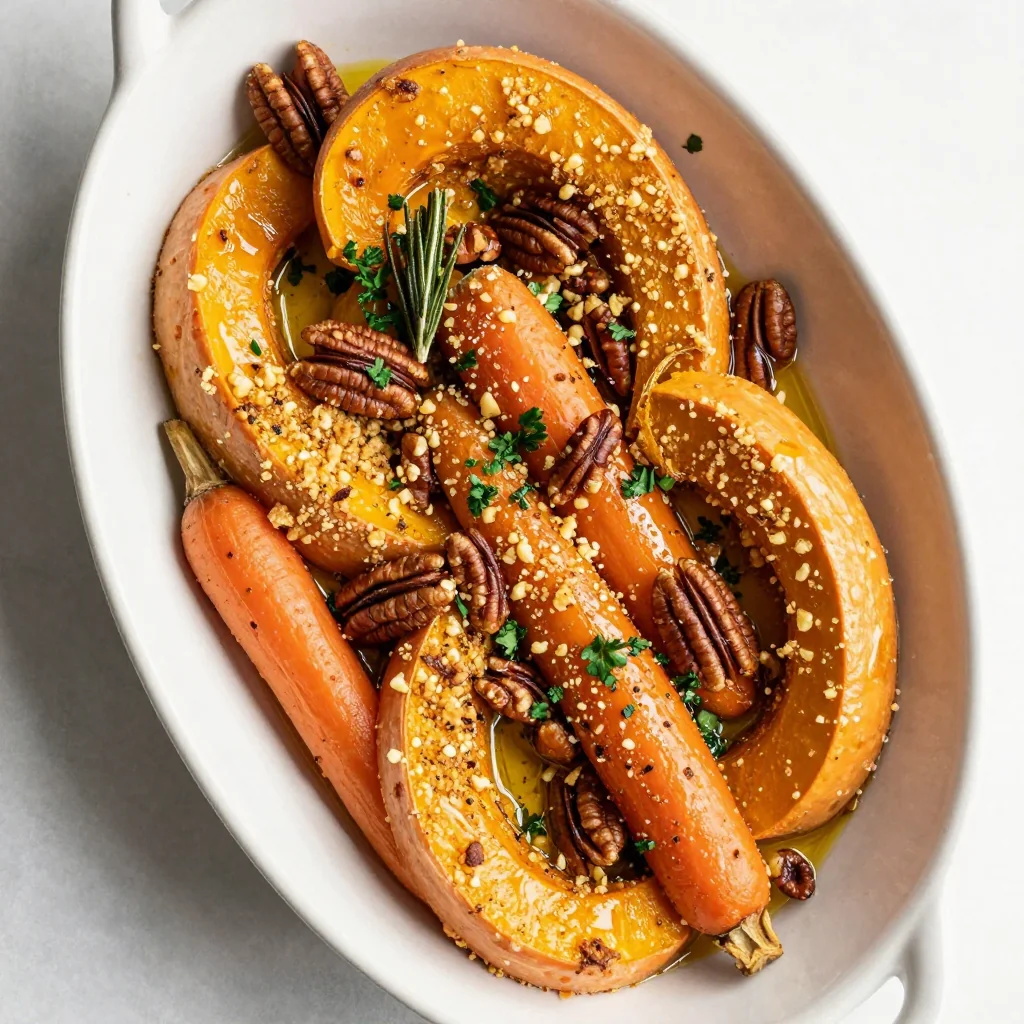
Love this? Pin it for later! 📌
I still remember the first time I served this roasted winter squash and carrot casserole at our annual Friends-giving potluck. The sun had just dipped below the horizon, candles flickered along the buffet, and the room smelled like thyme, garlic, and caramelized vegetables. One bite of the golden, herb-crusted top and my notoriously vegetable-skeptic cousin asked—no, begged—for the recipe. Since then, this casserole has become my ride-or-die vegetarian centerpiece for any chilly-weather gathering. It’s elegant enough for a holiday spread yet cozy enough for a Tuesday night when the frost is thick on the windows and you want the oven to do the heavy lifting. If you’re looking for a main dish that feels like a warm blanket, tastes like autumn sunshine, and just happens to be loaded with vitamins A and C, you’ve landed in the right spot.
Why This Recipe Works
- Depth of flavor: Roasting concentrates the squash and carrot sugars, creating natural sweetness without added sugar.
- Garlic-herb crunch: A buttery panko-parmesan crust bakes up audibly crisp, contrasting the silky vegetables beneath.
- One-pan ease: Everything roasts on a single sheet pan before assembly—minimal cleanup, maximum flavor.
- Make-ahead magic: Assemble up to 24 hrs early; bake when guests arrive.
- Vegetarian main or side: Serve as a hearty entrée or pair with roast poultry for omnivores.
- Freezer-friendly: Bakes beautifully from frozen for future weeknight comfort.
Ingredients You'll Need
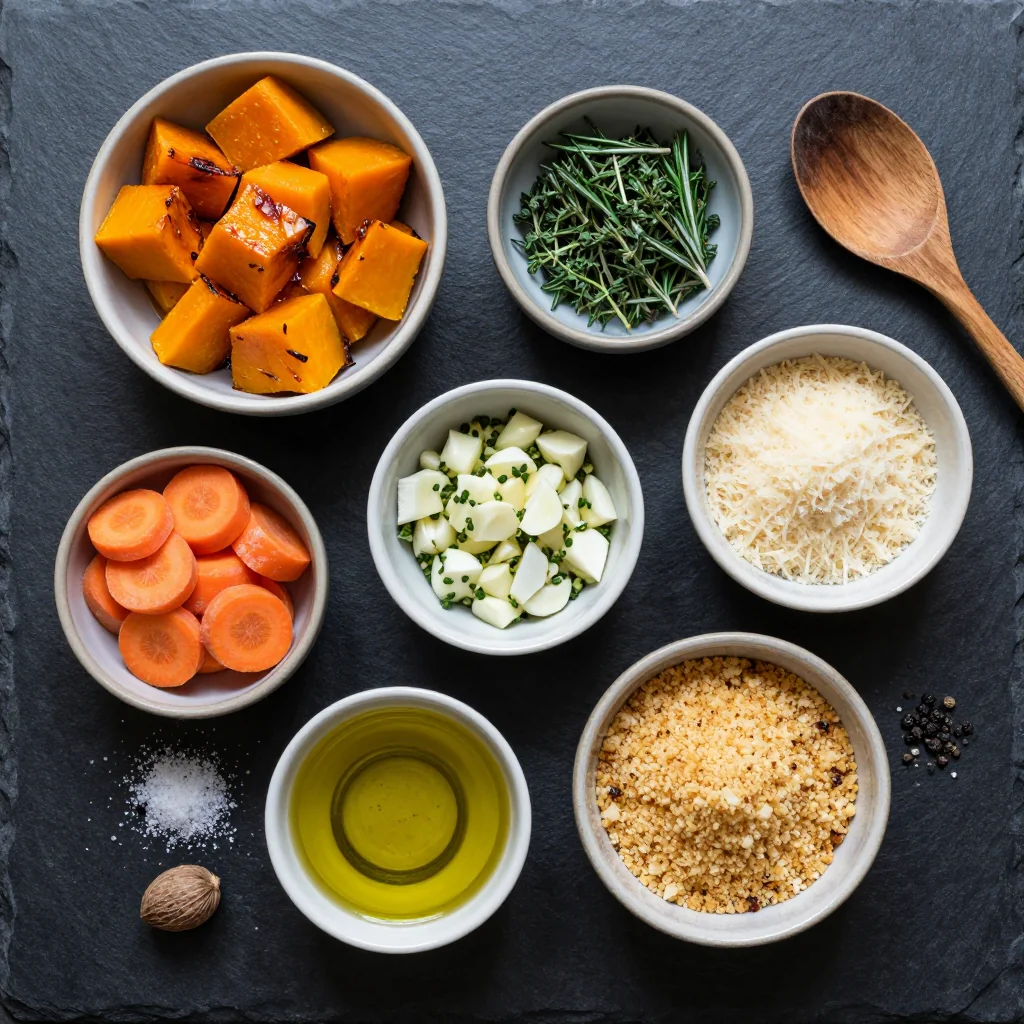
Great casseroles start with great produce. When selecting winter squash, look for a kabocha, red kuri, or sugar pumpkin with matte, unblemished skin that feels heavy for its size—these varieties are silkier and sweeter than watery carving pumpkins. Carrots should be firm and brightly colored; skip any with cracks or soft spots. For the garlic-herb crust, use day-old crusty bread or plain panko for ultimate crunch; avoid seasoned crumbs that may compete with the herbs. Fresh thyme and rosemary are worth seeking out—dried herbs won’t deliver the same fragrant oils. Finally, grate your own parmesan; the anti-caking cellulose in pre-shredded cheese can dull flavor and prevent clumping in the crust.
Substitutions: Butternut squash works in a pinch, though you’ll lose kabocha’s chestnut notes. Vegan? Swap butter for olive oil and use nutritional yeast instead of parmesan. Gluten-free panko is widely available and performs identically. And if your garden runneth over with sage or parsley, fold them into the crumb mixture for a personalized green note.
How to Make Roasted Winter Squash and Carrot Casserole with Garlic Herb Crust
Heat the oven & prep the produce
Position a rack in the center and preheat to 425 °F (220 °C). Line a rimmed sheet pan with parchment for easy release. Halve the squash, scoop out seeds with a sturdy spoon, then cut into ¾-inch wedges; peel if using butternut, but leave kabocha skin on—it becomes tender and edible. Peel carrots and cut on the bias into ½-inch coins so they roast at the same rate as the squash.
Season & roast
Pile vegetables onto the sheet pan. Drizzle with 3 Tbsp olive oil, 1 tsp kosher salt, ½ tsp pepper, and 1 Tbsp maple syrup to accelerate caramelization. Toss with your hands, then arrange in a single layer. Roast 25 minutes, rotate pan, and roast another 15–20 minutes until edges char and centers yield easily to a fork.
Create the garlic-herb crumbs
While vegetables roast, melt 4 Tbsp unsalted butter in a skillet over medium heat. Add 2 minced garlic cloves and cook 30 seconds until fragrant but not browned. Stir in 1 cup panko, ½ cup grated parmesan, 1 tsp fresh thyme leaves, ½ tsp chopped rosemary, and a pinch of salt. Cook, stirring, 3 minutes until golden. Remove from heat; crumbs will crisp further in the oven.
Build the base
Lower oven to 375 °F (190 °C). Lightly butter a 2-quart casserole dish. In a bowl, whisk ¾ cup heavy cream, 2 large eggs, ½ tsp salt, and a scrape of fresh nutmeg. Fold roasted vegetables into the custard, then scrape everything into the dish, spreading to an even layer. The cream keeps the casserole moist and binds the vegetables without tasting rich or heavy.
Add the crust & bake
Scatter garlic-herb crumbs evenly over the top; gently press so they adhere but still sit proud for crunch. Bake 25 minutes until custard sets and topping is deep golden. If browning too quickly, tent loosely with foil for the last 5 minutes.
Rest & serve
Let the casserole stand 10 minutes. This brief rest firms the custard, prevents scalding mouths, and makes slicing neater. Garnish with additional fresh thyme leaves and a shower of lemon zest to brighten the earthy flavors.
Expert Tips
Double-roast for deeper sweetness
Roast vegetables earlier in the day, refrigerate, then re-roast 10 minutes before assembling. The second blast evaporates residual moisture, intensifying flavor.
Drain excess liquid
If your squash seems watery after roasting, blot gently with paper towels to keep the custard silky, not soupy.
Brown equals flavor
Don’t fear deeply caramelized edges—those dark spots deliver nutty complexity that elevates the entire dish.
Use a thermometer
The custard is set when the center registers 170 °F (77 °C) and a knife inserted near the edge comes out clean.
Variations to Try
- Spicy Southwest: Add 1 tsp chipotle powder to the vegetables and sub pepper-jack for parmesan.
- Moroccan twist: Swap thyme for ras-el-hanout and scatter in a handful of chopped dried apricots with the custard.
- Green & golden: Fold in blanched kale or spinach for color and nutrients.
- Root-veg medley: Replace half the carrots with parsnips or celery root for earthier depth.
Storage Tips
Refrigerate: Cool completely, cover tightly, and refrigerate up to 4 days. Reheat individual portions in a 350 °F oven for 12 minutes or microwave for 90 seconds though crust will soften.
Freeze: Wrap unbaked casserole (minus crumbs) in a double layer of foil; freeze up to 2 months. Thaw overnight in fridge, add fresh crumbs, and bake as directed adding 10 extra minutes.
Make-ahead: Roast vegetables and mix custard up to 2 days ahead. Store separately, assemble, and bake when ready—perfect for holiday sanity.
Frequently Asked Questions
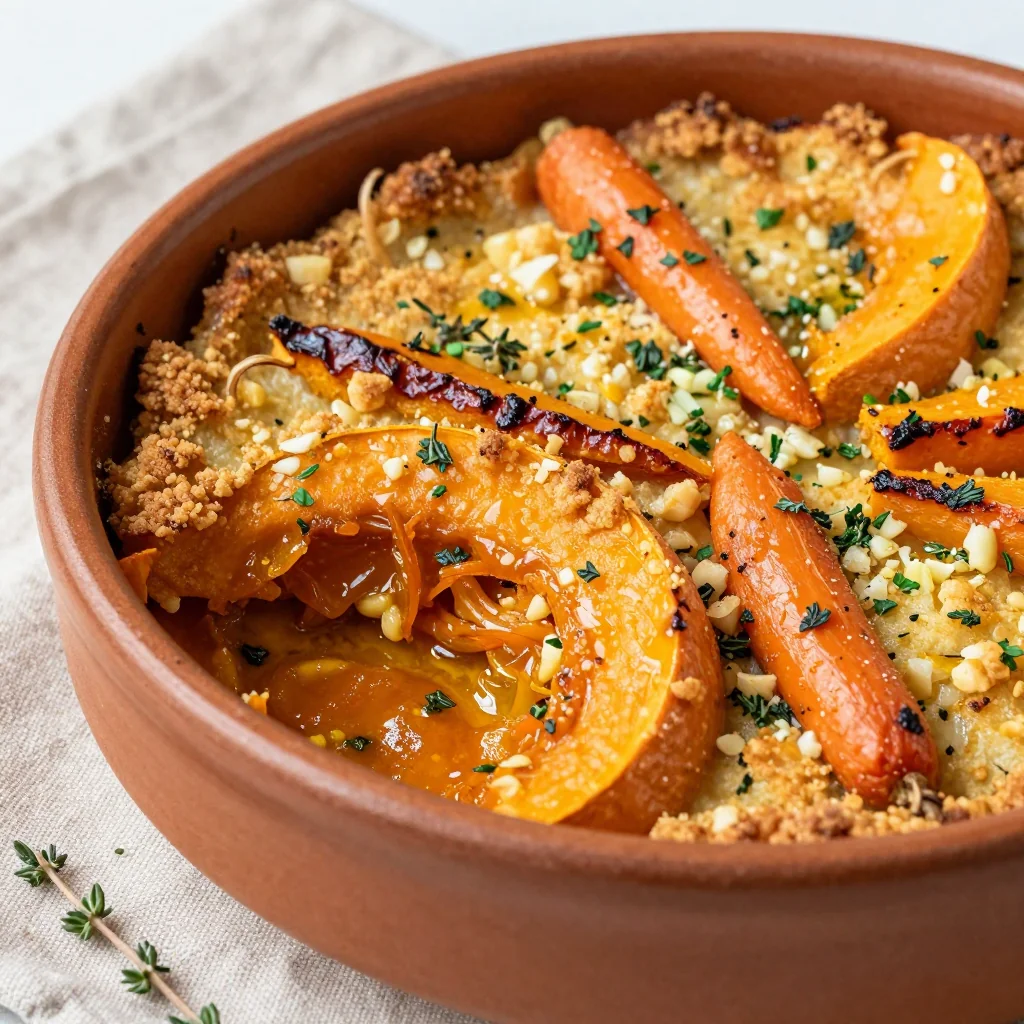
Roasted Winter Squash and Carrot Casserole with Garlic Herb Crust
Ingredients
Instructions
- Roast vegetables: Preheat oven to 425 °F. Toss squash and carrots with olive oil, maple syrup, 1 tsp salt, and pepper on a parchment-lined sheet pan. Roast 40–45 minutes until caramelized, flipping halfway.
- Make crumbs: Lower oven to 375 °F. In a skillet melt butter over medium heat. Add garlic; cook 30 seconds. Stir in panko, parmesan, thyme, rosemary, and a pinch of salt; cook 3 minutes until golden. Set aside.
- Mix custard: In a bowl whisk cream, eggs, remaining ¾ tsp salt, and nutmeg.
- Assemble: Fold roasted vegetables into custard; transfer to a buttered 2-quart casserole. Top evenly with garlic-herb crumbs, pressing lightly.
- Bake: Bake 25 minutes until custard sets and topping is deep golden. Tent with foil if browning too quickly.
- Rest & serve: Let stand 10 minutes. Garnish with lemon zest and thyme leaves before serving.
Recipe Notes
For the crispiest crust, add crumbs just before baking rather than during make-ahead assembly.